10 Signs You Need a New Car Battery Every Driver Should Know
A failing battery rarely dies without warning. If you know what to look for, you can avoid being stranded with a car that won’t start. This guide covers 10 signs you need a new car battery every driver should know, explains the most common bad car battery signs, and helps you decide when to replace a car battery before it completely fails.
1. Why Car Batteries Fail Over Time
The car battery is essentially a chemical storage tank designed to provide a massive, instantaneous burst of electricity to the starter motor. Beyond ignition, it also acts as a vital “surge protector” for the vehicle’s sensitive computers and provides power to electronics (like the alarm system and clock) when the engine is turned off.
Common Causes of Battery Wear
Battery degradation is an inevitable chemical process, but several factors accelerate the need to decide when to replace car battery.
-
Age: Lead-acid batteries naturally lose their ability to hold a charge after 3 to 5 years.
-
Heat: High temperatures are the number one killer of batteries, causing internal fluids to evaporate and grids to corrode.
-
Short Trips: Constant short drives don’t give the alternator enough time to fully recharge the battery, leading to “acid stratification” and permanent capacity loss.
Why Early Warning Signs Matter
Ignoring the early signals of a failing battery is a recipe for a roadside emergency. Because modern vehicles rely so heavily on stable voltage, a weak battery can cause erratic transmission shifting, “ghost” dashboard warnings, and expensive damage to the alternator. Catching these signs early turns a potential towing bill into a simple, scheduled maintenance task.
2. 10 Signs You Need a New Car Battery
2.1 Slow Engine Cranking
Engine Turns Over Slowly Before Starting: The most classic of all bad car battery signs is the labored “rur-rur-rur” sound when you turn the key. Instead of a crisp, immediate start, the engine sounds like it is dragging through thick sludge. This occurs because the battery can no longer provide the necessary amperage to spin the starter motor at its designed speed.
Why Weak Batteries Struggle to Deliver Power: Inside the battery, lead plates are submerged in an electrolyte solution. Over time, a hard crust of lead sulfate forms on these plates (sulfation), which increases internal resistance. When you try to start the car, this resistance prevents the “push” of electricity, leaving the starter starving for energy. If your car takes longer than two seconds to fire up, your battery is likely in its final weeks of life.
The Heartbeat of Your Vehicle
Every driver has experienced that moment of hesitation a split-second delay when turning the ignition that makes you wonder if today is the day your car won’t start. Understanding when to replace car battery units isn’t just about avoiding a dead engine; it’s about maintaining the health of your vehicle’s entire electrical nervous system.
Your battery is a wear-and-tear item, much like your tires or brake pads, yet it often receives the least attention until it fails completely. By recognizing the bad car battery signs from a sluggish engine crank to the physical toll of seasonal heat you can take control of your vehicle’s reliability. This guide is designed to transform those subtle “hiccups” in your car’s performance into clear, actionable diagnostics, ensuring you are never left stranded by a power failure you could have predicted
2.2 Dim or Flickering Headlights
Headlights dim at idle
When headlights become noticeably dim while the engine is idling, it usually indicates that the alternator is not producing enough power at low engine speeds. At idle, the electrical system relies heavily on the battery. If the battery is weak or the alternator is underperforming, the lights will dim because there isn’t enough voltage to maintain full brightness.
Lights brighten when revving the engine
If the headlights get brighter when you press the accelerator, this is a strong sign of a charging system issue rather than a bad bulb. Revving the engine increases alternator speed, allowing it to generate more electrical output. This temporary brightness suggests the alternator is struggling at low RPMs or the voltage regulator is failing.
Difference between battery vs charging issues
-
Battery problem: Headlights may be dim even when the engine is off or struggle to turn on. The issue worsens after the car sits overnight.
-
Charging (alternator) problem: Headlights change brightness with engine speed, flicker while driving, or dim at stops but brighten while moving.
In short, steady dimness points to the battery, while brightness changes point to the alternator or voltage regulator.
2.3 Clicking Sound When Turning the Key
Rapid clicking vs single click
-
Rapid clicking: This usually means the battery voltage is too low to engage the starter motor fully. The starter relay clicks repeatedly as power drops instantly under load.
-
Single click: Often indicates a faulty starter solenoid, a seized starter motor, or poor electrical connections rather than just a weak battery.
What low battery voltage means
Low voltage means the battery cannot supply enough current to turn the starter motor. While the dashboard lights may still turn on, the starter requires significantly more power. This mismatch causes clicking instead of engine cranking.
Why this often happens suddenly
Battery failure can appear sudden because batteries degrade internally over time. One cold morning or one short trip too many can push a weak battery past its limit. Corroded terminals or a failing alternator can also accelerate this sudden failure.
2.4 Electrical Problems Inside the Car
Power windows moving slowly
Slow power windows are a classic sign of low system voltage. When the battery is weak or the alternator isn’t charging properly, high-draw components like window motors receive less power, causing sluggish movement.
Radio cutting out or resetting
Modern car radios are sensitive to voltage drops. If the radio resets, loses presets, or cuts out while starting the car, it usually means voltage is dropping too low during engine cranking. This strongly points to a failing battery or poor battery connections.
Dashboard glitches
Flickering gauges, warning lights appearing randomly, or digital displays glitching are often early indicators of electrical instability. These symptoms typically appear before the car fails to start and should not be ignored, as they signal underlying power supply issues.
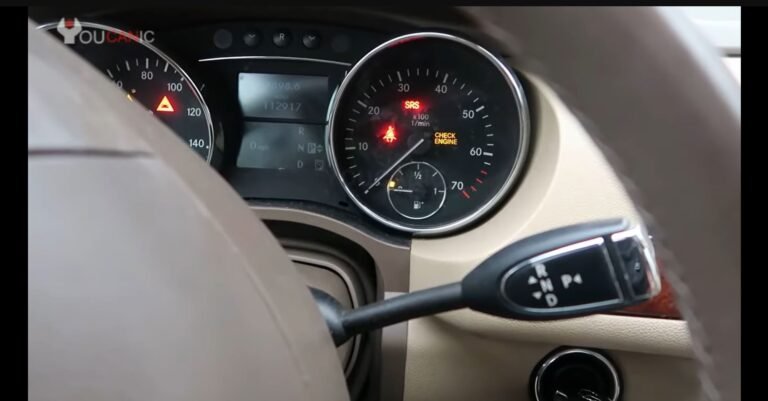
2.5 Battery Warning Light on the Dashboard
What the battery light really means Contrary to popular belief, the red battery symbol on your dashboard doesn’t always mean the battery itself is dead. It is essentially a “Charging System Failure” indicator. When this light illuminates, the computer has detected that the electrical system is operating below the required voltage (typically below 12.5 to 13.5 volts). It signifies that the vehicle is running solely on the energy stored in the battery, which is a finite resource that will eventually run out, leading to a total engine stall.
Battery vs. alternator clarification Think of the battery as a “storage tank” and the alternator as the “pump” that refills it. If the light stays on while the engine is running, the alternator is likely failing to recharge the battery. However, if the battery has a dead cell or cannot hold a charge, the light may also trigger because the system detects an inability to maintain stable voltage. A simple multimeter test can distinguish which component is the culprit.
When to test immediately If this light flickers or stays solid, you should seek a diagnostic test the same day. You typically have about 20 to 30 minutes of driving time before the battery is fully depleted and the car shuts down. To extend this window, immediately turn off high-draw accessories like the air conditioning, radio, and heated seats.
2.6 Swollen or Misshapen Battery Case
Causes of battery swelling A car battery is a lead-acid chemical reactor. Swelling occurs when the flat lead plates inside the battery casing warp or when gasses build up faster than the vents can release them. This is often the result of an internal short circuit or extreme chemical reactions that physically push against the plastic walls of the battery housing.
Heat and overcharging damage The two biggest enemies of battery shape are extreme heat and voltage regulation issues. In 2026, with rising average summer temperatures, “heat soak” causes the liquid electrolyte inside to evaporate and the internal components to expand. Additionally, if your alternator’s voltage regulator is faulty, it may “overcharge” the battery, essentially boiling the acid inside and causing the case to bloat or “bloat.”
Why a swollen battery is unsafe A misshapen battery is a ticking time bomb. The structural integrity of the plastic case is compromised, significantly increasing the risk of leaking sulfuric acid, which can corrode your engine bay. More dangerously, the internal pressure can lead to an explosion if a spark occurs. If you notice your battery looks like a “bloated loaf of bread,” do not attempt to jump-start it; replace it immediately.
2.7 Frequent Jump-Starts
How often is “too often” If you have to jump-start your car more than twice in a single month, your battery is likely at the end of its life. While a single jump-start might be necessary because you left the lights on, needing frequent boosts indicates that the battery’s internal chemistry can no longer hold a “surface charge” or provide the high amperage needed to turn the starter motor.
Why jump-starting doesn’t fix the problem Jump-starting is a temporary bypass, not a repair. It provides enough “juice” to crank the engine, but it cannot fix a dead cell or desulfation on the lead plates. Relying on the alternator to “charge back up” a deeply discharged battery puts immense strain on the alternator, which is designed to maintain a charge, not to act as a heavy-duty battery charger. This can lead to a much more expensive alternator failure.
Risk of being stranded Every time a battery is drained to the point of needing a jump, its total lifespan is permanently shortened. Continuing to jump-start an old battery is playing a game of “automotive roulette.” Eventually, the battery will reach a state of internal collapse where no amount of jumping will start the car, often leaving you stranded in a grocery store parking lot or, worse, on the side of a highway at night.
2.8 Rotten Egg or Sulfur Smell
What causes the smell:
The pungent “rotten egg” odor is caused by the release of hydrogen sulfide gas. This occurs when the sulfuric acid inside the battery begins to boil or break down chemically, usually due to extreme overcharging or an internal short circuit.
Battery acid leaks and internal damage:
This smell is a clear indicator that the battery’s internal structure has been compromised. The gas is often accompanied by a “sweating” battery case or visible liquid leaking from the vents. This acid is highly corrosive and can quickly eat through metal battery trays and wiring harnesses.
When replacement is urgent:
If you smell sulfur, replacement is an immediate emergency. Not only is the battery failing to provide power, but the escaping gas is flammable and toxic. Continuing to drive with a battery in this state can lead to an explosion under the hood or severe damage to your car’s electrical connectors.
2.9 Old Battery (3–5 Years or More)
Average car battery lifespan:
The industry standard for a lead-acid battery is between three and five years. While the car may still start, the internal lead plates have likely undergone significant sulfation by year four, meaning the battery’s “reserve capacity” is a fraction of what it was when new.
How climate affects battery life:
Climate is the primary factor in determining when to replace car battery units. In hot, southern climates, batteries often fail closer to the 3-year mark because heat accelerates the chemical reaction and evaporates internal liquids. In northern climates, batteries may last 5 years but are more likely to fail suddenly during the first freeze of the year.
Why age alone is a warning sign:
Even if your car starts fine, a battery over four years old is “statistically dead.” It loses its ability to recover from small drains (like leaving a dome light on) and can fail without any other symptoms. Replacing a battery based on age is the best way to prevent an unexpected breakdown.
2.10 Car Won’t Start Without Warning
Why batteries can fail suddenly:
Sometimes, there are no dimming lights or slow cranks. A battery can suffer an “internal cell failure” where a lead plate physically breaks or shorts out due to road vibration. This causes an instant drop in voltage that prevents the car from starting, even if it ran perfectly an hour prior.
Cold weather and battery performance:
Cold weather doesn’t necessarily kill batteries, but it exposes a battery that is already dying. At $0^\circ\text{C}$, a battery loses about 35% of its power, while the engine requires significantly more power to move cold, thick oil. This “perfect storm” is why most drivers discover they have a bad car battery on the first cold morning of winter.
Why testing is critical:
Since batteries can fail “silently,” a professional load test is the only way to see past the surface charge. A battery might show $12.6\text{V}$ on a multimeter but fail instantly when a load is applied. Regular testing ensures you catch a “sudden” failure before it happens.
Navigating the transition from a reliable vehicle to one that won’t start often comes down to recognizing the physical and chemical signals of aging. Knowing when to replace car battery components is rarely about a single event; it is a combination of monitoring the battery’s age, smelling for chemical leaks, and understanding how environmental factors like winter or extreme summer heat tax the system.
While some signs of a bad car battery are subtle, like a slightly slower start on a Monday morning, others are visceral and urgent, like the pungent scent of sulfur or a battery that simply refuses to hold a charge after a short parking session. By keeping a close eye on the calendar and your car’s behavior, you can move from reactive repairs to proactive maintenance, ensuring that your vehicle’s heart remains strong for years to come.
3. How to Confirm a Bad Car Battery
Battery Voltage Test
The most accessible way to check your battery’s health is with a digital multimeter. To get an accurate reading, the car should be off for at least an hour. A fully charged, healthy battery should show a reading of 12.6V. If the meter reads 12.2V, the battery is only at 50% charge, and if it falls below 12.0V, it is considered “dead” or fully discharged. If you start the engine and the voltage doesn’t jump to between 13.5V and 14.7V, you likely have an alternator problem rather than a battery issue.
Load Testing Explained
A voltage test only tells you the “surface” charge; a load test tells you if the battery can actually do its job. A load tester applies a high-amperage draw—similar to what the starter motor demands—while monitoring the voltage. If the battery voltage plummets below 9.6V during the 15-second test, the internal lead plates are too degraded to support the car’s electrical needs. This is the gold standard for knowing when to replace car battery units.
Free Battery Testing Options
You don’t necessarily need to buy expensive equipment to confirm your suspicions. Most major auto parts retailers (such as AutoZone, O’Reilly, or Advance Auto Parts) offer free battery and alternator testing. They use professional-grade handheld testers that can diagnose a “bad cell” or a failing voltage regulator in minutes, providing a printed report of your battery’s current health versus its original factory ratings.
4. When to Replace a Car Battery vs Recharge It
Situations Where Charging Helps
Recharging is a viable solution if the battery is healthy but was drained by an external factor. If you accidentally left your headlights on overnight or left a door slightly ajar, the battery has simply been “starved.” In these cases, using a dedicated plug-in charger (not just driving the car) can often restore the battery to its full capacity without needing a replacement.
When Replacement Is the Only Solution
If the battery is more than four years old, has a swollen case, or has been jump-started more than three times in a month, recharging is a waste of time. When the internal lead plates are heavily sulfated or a cell has “shorted,” the battery can no longer hold the energy the alternator sends to it. In these scenarios, the battery may show a full charge on a screen but will fail the moment you turn the key, making replacement the only safe and reliable option.
Cost Comparison: Testing vs Replacement
The cost of testing is usually $0, making it a “no-brainer” before spending money. A new car battery typically costs between $100 and $250, depending on whether it is a standard lead-acid or a high-performance AGM (Absorbent Glass Mat) battery. While $200 may seem steep, it is significantly cheaper than a $150 emergency tow and the potential damage a failing battery can cause to your starter motor and alternator.
To help you finalize your understanding of vehicle maintenance, this section addresses the lingering questions that often cause confusion and provides a concluding roadmap for your battery health.
5. Common Questions Drivers Ask About Bad Car Battery Signs
How long can you drive with a weak battery?
There is no fixed timeframe, but you are essentially living on borrowed time. A weak battery might start your car fine for a week of warm weather but fail the very first time the temperature drops by ten degrees. Generally, once you notice bad car battery signs like a slow crank, you have anywhere from a few days to a month before the battery fails to start the engine entirely.
Can a bad battery damage the alternator?
Yes, and this is a costly mistake many drivers make. A healthy alternator is designed to maintain a battery, not to constantly “refill” a dead one. If you drive with a battery that has a dead cell or cannot hold a charge, the alternator will run at 100% capacity indefinitely to try and compensate. This leads to overheating and premature failure of the alternator’s internal diodes, turning a $150 battery swap into a $700 repair.
Why does my battery keep dying?
If you’ve recently replaced the battery and it continues to fail, you likely have a “parasitic draw” or a charging system failure. A parasitic draw is an electrical component (like a faulty light switch or an aftermarket alarm) that stays on after the engine is off, draining the battery. Alternatively, a worn serpentine belt or a failing alternator pulley may be preventing the battery from receiving a proper charge while you drive.
Can cold weather kill a battery overnight?
Cold weather doesn’t usually “kill” a healthy battery, but it can finish off a weak one. At freezing temperatures, a battery’s chemical reaction slows down significantly, reducing its power output by about 30-50%. If your battery was already struggling due to age, the cold provides the final “stress test” that it cannot pass, leading to a dead car the next morning.
6. Final Thoughts: Don’t Ignore These Battery Warning Signs
The most vital bad car battery signs to remember are the “Triple Threat”: audible (slow cranking or clicking), visual (dim lights or a swollen case), and chemical (the smell of sulfur). If your engine hesitates for more than two seconds during ignition, or if your dashboard lights flicker when you use the power windows, your battery is sending you a clear distress signal that it can no longer stabilize the vehicle’s voltage.
Why Early Replacement Saves Money
Proactive replacement is always cheaper than reactive repair. By deciding when to replace car battery units based on age (3–5 years) or early symptoms, you avoid the cost of emergency tow trucks, missed work, and the “collateral damage” caused to your starter motor and alternator. A battery is a wear-and-tear item; replacing it on your own terms is a hallmark of smart vehicle ownership.
Recommendation for Regular Battery Checks
To ensure total reliability, make battery inspections a part of your bi-annual maintenance routine. Most shops will perform a free “State of Health” test during a standard oil change. Checking for terminal corrosion and ensuring the battery is tightly secured in its tray can prevent vibration-related damage and extend the life of your electrical system significantly.

- Find the Right Engine Oil for Your Car: A Quick Guide - March 1, 2026
- Car Battery Booster Basics: Start Your Vehicle in Minutes - March 1, 2026
- How Long Does It Take To Charge A Motorcycle Battery Charging Time Guide - February 28, 2026