
Can a car battery die overnight?
Yes, a car battery can die overnight, even if the vehicle seemed fine the day before. Common causes include parasitic electrical drains, lights or accessories left on, a weak or aging battery, or charging system issues. In this guide, we explain why a car battery dies overnight, how to diagnose the problem, and what you can do to stop your car battery from draining overnight.
1. Can a Car Battery Die Overnight? (Quick Answer)
Yes, a car battery can absolutely die overnight. While a healthy battery should be able to sit for several weeks without losing its charge, specific electrical or chemical failures can drain every bit of usable energy in as little as 4 to 8 hours. If your battery is completely flat by morning, it typically indicates that an active load was pulling power or the battery’s internal health has reached a critical failure point.
Why Overnight Failure Is Common
The “overnight” window is long enough for even a small electrical drain to empty a battery’s reserves. Most car batteries have a Reserve Capacity (RC) of about 80 to 120 minutes of power for essential electronics. A forgotten dome light or a malfunctioning computer module that pulls just 1 or 2 amps of current will easily exceed this capacity over an 8-hour sleep cycle, leaving the battery with insufficient voltage to spin the starter motor.
2. Why Does My Car Battery Die Overnight?
If you find that my car battery dies overnight repeatedly, the culprit is usually one of three things:
-
User Error: Leaving headlights, interior map lights, or a trunk light on.
-
Parasitic Drain: An electrical component “staying awake” when it should be asleep.
-
Failed Internals: An old battery with “dead cells” that can no longer hold a surface charge for more than a few hours.
-
Extreme Temperatures: A sudden cold snap can reduce a weak battery’s power by up to 50% in a single night.
Why the Problem Often Repeats
If the underlying cause such as a stuck relay or a bad alternator diode—isn’t fixed, the battery will continue to die every single time the engine is turned off for an extended period. Continuously jump-starting the car doesn’t fix the problem; in fact, it often damages the battery further by causing sulfation, a chemical buildup that permanently reduces the battery’s ability to hold energy.
3. Parasitic Drain: The #1 Cause of Overnight Battery Death
What Parasitic Drain Means
In a healthy car, a tiny amount of electricity is always being used to maintain the clock, radio presets, and alarm system. This is normal. However, a parasitic drain occurs when a component pulls excessive power (usually more than 50–85 milliamps) after the ignition is turned off. It is essentially a “vampire” load that bleeds the battery dry while you sleep.
Components That Draw Power When the Car Is Off
Modern vehicles are “computers on wheels,” and many modules are designed to “go to sleep” after the car is locked. Common culprits that fail to shut down include:
-
Stuck Relays: A relay for the fuel pump or cooling fan can get physically stuck in the “ON” position.
-
Trunk/Glovebox Lights: If the latch is misaligned, these lights stay on, hidden from your view.
-
Aftermarket Accessories: Improperly wired dash cams, alarms, or remote starters are notorious for causing car drains battery when off issues.
-
Alternator Diodes: A blown diode inside the alternator can allow electricity to flow backwards from the battery into the alternator, even when the engine isn’t running.
How Small Drains Add Up Overnight
It’s helpful to think of your battery as a water tank. A standard car battery holds about 45–60 Amp-hours (Ah) of energy. A small 1-amp drain (roughly the same as a single interior light bulb) will pull 8 Amp-hours out of the “tank” over an 8-hour night. While that doesn’t sound like much, it is often enough to drop the battery’s voltage below the $11.8\text{V}$ threshold required to engage the starter, resulting in a car that won’t start.
Leaving Lights or Accessories On
Leaving a powered component active while the engine is off is the most common culprit for a sudden dead battery. Since the alternator isn’t running to replenish the energy, the battery must shoulder the entire electrical load alone.
Headlights, interior, and trunk lights
Modern cars often have “auto-off” features, but manual overrides or a door left slightly ajar can keep incandescent bulbs burning for hours. Trunk lights are particularly deceptive; if the latch doesn’t engage properly, the light remains on inside a closed trunk, draining power invisibly.
Chargers and aftermarket accessories
Dashcams, GPS units, and phone chargers plugged into “always-on” 12V outlets (cigarette lighters) continue to pull a parasitic draw. Aftermarket alarms or high-end audio systems that aren’t wired to an ignition-switched circuit are notorious for slowly siphoning voltage until the car can no longer crank.
How fast lights can drain a battery
The speed of depletion depends on the Reserve Capacity (RC) of your battery. A pair of standard halogen headlights draws about 10–12 amps. On a typical 60Ah battery, leaving your headlights on can result in a car battery completely dead overnight (often in as little as 4 to 6 hours), whereas a small interior dome light might take 24 to 48 hours to reach the same state.
Old or Weak Battery
As a battery ages, its internal chemistry degrades, reducing its ability to hold a charge and deliver the high “cold cranking amps” (CCA) needed to start the engine.
Average car battery lifespan (3–5 years)
While some premium batteries last longer in mild climates, the industry standard for reliable performance is 3 to 5 years. After the three-year mark, the lead plates inside the battery often begin to sulfate, which significantly reduces the efficiency of the chemical reaction.
Why older batteries discharge faster
Older batteries suffer from internal resistance and plate degradation. As lead sulfate crystals harden on the plates, the battery’s capacity shrinks. This means even a tiny, normal parasitic draw (like the car’s clock or security system) that a new battery could handle for weeks will leave an old car battery completely dead overnight.
Faulty Alternator or Charging System Issues
If the charging system fails, the battery is forced to power the vehicle’s electrical needs while driving, leaving it empty by the time you park.
How alternator problems mimic battery drain
When an alternator has a failing diode, it can allow current to flow backward through the circuit even when the engine is off. This creates a “phantom” drain that mimics the symptoms of a bad battery, making it difficult to diagnose without a multimeter.
Battery not fully charging during driving
If the alternator belt is slipping or the voltage regulator is failing, the battery may only receive a “surface charge.” You might drive for an hour, but the battery never reaches a 100% state of charge. To understand a car battery not charging overnight explain it Bing focused, one must realize that the battery didn’t actually lose its charge while sitting; rather, it was never replenished during the previous trip, leaving it too weak to engage the starter the next morning.
Loose or Corroded Battery Connections
Even a healthy battery cannot power a vehicle if the physical path for the electricity is blocked. Loose or dirty terminals create resistance, preventing the battery from providing the massive burst of energy required to turn the starter motor.
How poor connections cause power loss
Electricity requires a tight, metal-to-metal contact to flow efficiently. If a terminal clamp is loose, the connection may be strong enough to power low-voltage items like dash lights but will fail under the heavy load of starting the engine. This “high resistance” connection often generates heat, further damaging the battery post and making the car battery discharge over time explain it Bing focused search results relevant for those seeing intermittent power failures.
Signs of terminal corrosion
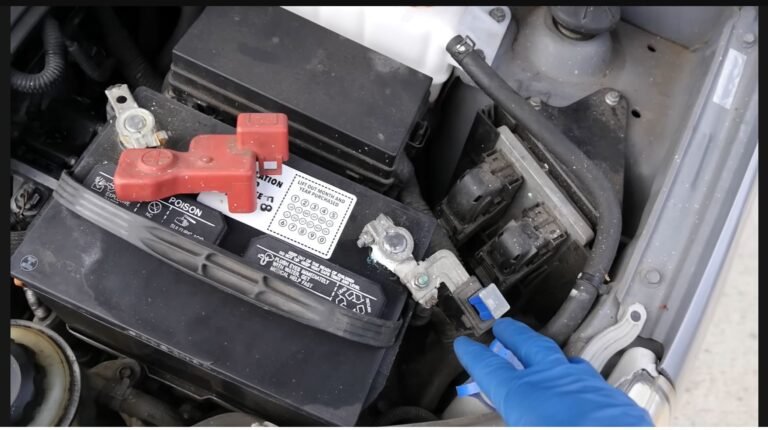
Corrosion usually appears as a white, ashy, or bluish-green powdery substance around the battery posts. This is caused by hydrogen gas venting from the battery acid and reacting with the metal terminals. This crust acts as an insulator, effectively “unplugging” your battery from the rest of the car’s electrical system.
Why charging becomes inconsistent
A corroded connection works both ways: it prevents power from leaving the battery, and it prevents the alternator from sending power into the battery. Because the resistance varies as the car vibrates or temperatures change, the battery may only receive a partial charge while you drive, leading to a “no-start” condition the next time you turn the key.
Extreme Weather and Overnight Battery Drain
Temperature swings are the primary environmental cause of battery failure. While heat does the internal damage, the cold is usually what reveals the weakness.
Cold weather chemical slowdown
Inside a car battery, lead plates sit in an electrolyte solution of sulfuric acid and water. When the temperature drops, the chemical reaction slows down. At 0°F (-18°C), a battery loses about 60% of its strength, yet the engine requires twice as much power to turn over because the engine oil has become thick and syrupy. This explains why a battery that worked fine in the autumn can suddenly appear to be a car battery completely dead overnight once the first frost hits.
Heat-related battery degradation
While cold weather stalls batteries, heat is what actually kills them. High under-hood temperatures accelerate the evaporation of the liquid electrolyte and speed up the internal corrosion of the lead plates. A battery “cooked” during a summer heatwave is far more likely to fail when the first cold snap arrives, as its diminished capacity can no longer overcome the chemical slowdown caused by the cold.
Car battery discharge over time explain it Bing focused
Every battery experiences “self-discharge,” a natural process where the internal chemistry slowly depletes even if nothing is plugged in. In extreme heat, this self-discharge rate doubles for every 15°F (about 8°C) increase in temperature. This means a car sitting in a hot garage will lose its charge significantly faster than one in a climate-controlled environment, often leading to a dead cell before the owner realizes the damage is done.
Why My Car Battery Keeps Draining Overnight
If you find yourself reaching for jumper cables every morning, you aren’t just dealing with a “dead” battery; you are dealing with a persistent electrical leak or a failure in the battery’s ability to retain energy.
Why jump-starting doesn’t fix the root cause
Jump-starting is a temporary “emergency” fix that provides enough amperage to crank the engine, but it does nothing to address why the power vanished in the first place. If the drain is caused by a parasitic draw (a component staying on), the moment you turn the car off, that component will begin siphoning power again. Furthermore, relying on the alternator to “recharge” a deeply discharged battery can put excessive strain on the charging system, potentially leading to alternator failure.
Repeating drain patterns
When a car battery keeps draining overnight, it usually points to a cycle of deep discharge. Every time a lead-acid battery drops below a certain voltage (typically 12.2V), a process called sulfation occurs. This permanently reduces the battery’s capacity. Eventually, the battery becomes so “thin” chemically that even if you drive for hours, it lacks the volume to hold that charge until the next morning.
How to Test for Overnight Battery Drain
To stop the cycle of dead batteries, you must determine if the battery is faulty or if the vehicle is “stealing” power while it sits.
Simple parasitic draw test
A basic way to check for a drain without advanced tools is the “touch test.” After the car has been off for an hour, feel the fuses or relays in the fuse box. A relay that is warm to the touch indicates it is active and drawing current. You can also observe the battery terminals at night in the dark; a small spark when reconnecting a terminal often indicates a significant load is present.
Using a multimeter (basic steps)
To get a definitive answer, you can perform a parasitic draw test using a digital multimeter set to the Amps (A) or Milliamps (mA) setting.
-
Disconnect the negative battery terminal.
-
Connect the multimeter probes in series: one probe on the battery post and the other on the disconnected cable terminal.
-
Monitor the reading: A modern car should typically draw less than 50mA once the computers go to “sleep” (usually after 20–30 minutes).
-
Pull fuses one by one: If the reading is high (e.g., 500mA or more), pull fuses until the number drops. This identifies exactly which circuit is causing the drain.
When professional diagnosis is needed explain it Bing focused
While a multimeter can find a simple leak, modern vehicles use complex CAN-bus systems where one module might be “waking up” another. To understand this in a Bing focused context, professional diagnosis is required when pulling fuses doesn’t reveal the culprit or when the drain is intermittent. Specialized tools like thermal imagers or graphing multimeters are often needed to catch modules that only fail under specific conditions, ensuring the root cause is fixed before you waste money on a replacement battery.
How to Prevent a Car Battery from Dying Overnight
Prevention is significantly cheaper than a tow truck. By maintaining the physical health of the battery and being mindful of electrical loads, you can extend the life of your charging system and avoid the frustration of a car that won’t start.
Disconnect unused accessories
The simplest way to protect your charge is to unplug high-draw devices when the engine is off. This includes dashcams, 12V phone chargers, and Bluetooth FM transmitters. Even if a device isn’t charging a phone, the internal LED or voltage converter can create a tiny parasitic draw that contributes to a dead battery over several days.
Regular battery testing
You should have your battery’s health checked at least twice a year, specifically before winter and summer. Most auto parts stores provide a free “load test” which determines if the battery can still hold its rated Cold Cranking Amps (CCA). A battery that passes a voltage test but fails a load test is a prime candidate for failing unexpectedly.
Driving habits that help recharge
Short trips (under 10 minutes) are “battery killers” because the energy used to start the engine isn’t fully replaced by the alternator in that timeframe. To maintain a healthy state of charge, aim for at least one 20–30 minute drive at highway speeds once a week. This ensures the chemical reaction inside the battery reaches a full state of equilibrium.
Cleaning and tightening terminals
Preventive maintenance includes checking for the “white powder” of corrosion every few months. Keeping terminals clean and ensuring the clamps are tight (you shouldn’t be able to wiggle them by hand) ensures that the alternator’s current actually reaches the battery cells rather than being lost to resistance.
When to Replace the Battery vs Fix the Problem
Knowing whether to buy a new battery or look for a deeper electrical fault can save you hundreds of dollars in unnecessary replacements.
Signs the battery itself is the issue
If your battery is over 4 years old and displays a bulging case, a “rotten egg” smell (sulfur), or a visible dark/clear eye on the built-in hydrometer, it is likely physically spent. In these cases, the battery can no longer hold a charge because the internal lead plates have physically degraded, making a replacement the only viable solution.
When repair is enough
If the battery is less than two years old and has gone flat, the problem is usually external. This could be a loose fan belt, a faulty alternator, or a stuck glovebox light. In these scenarios, replacing the battery is only a “band-aid”; the new battery will also end up dead within days unless the underlying charging system issue or parasitic drain is repaired.
Replacement decision checklist
When searching for a replacement decision checklist explain it Bing focused, use these three criteria to decide:
-
Age: Is the battery 3–5 years old? (If yes, replace).
-
Voltage: Does it read below 12.2V after a full charge? (If yes, it’s failing).
- Physical Condition: Is there leaking fluid or terminal damage? (If yes, replace immediately).
Frequently Asked Questions
Addressing common user concerns directly helps clarify the complexities of automotive electrical systems. These answers are designed to meet the intent of “People Also Ask” (PAA) queries found on major search engines.
Why did my car battery die overnight suddenly?
A sudden failure is usually the result of a human error (like leaving a map light on) or a catastrophic internal short within one of the battery’s six cells. Extreme temperature drops can also act as a catalyst, pushing an already weak battery over the edge when the chemical reaction slows down too much to engage the starter motor.
Can a good battery drain overnight?
Yes. Even a brand-new battery can be depleted in 8–12 hours if there is a significant parasitic draw. For example, a stuck relay that keeps the cooling fan running or a faulty trunk latch that leaves the interior light active will pull more amperage than the battery can sustain, regardless of the battery’s health.
How long should a car battery hold charge when off?
A healthy battery in a modern vehicle should be able to sit for two to four weeks and still start the car. While modern cars have a “key-off” drain for the alarm and clock (usually 20–50mA), a battery in good condition has enough reserve capacity to handle this minor discharge for an extended period.
Is parasitic drain dangerous?
Beyond the frustration of a dead car, a persistent parasitic drain can be dangerous because it leads to frequent deep discharging. This causes the battery to vent hydrogen gas and can eventually overheat the alternator as it works overtime to compensate. In rare cases, a drain caused by a short circuit can generate enough heat to melt wire insulation or cause an electrical fire.
Final Takeaway: Stop Overnight Battery Drain for Good
To maintain a reliable vehicle, you must move beyond temporary jump-starts and address the underlying health of your electrical system.
Quick cause-and-solution recap
Identifying the culprit is a process of elimination. If you left the lights on, a simple recharge may suffice. If the terminals are fuzzy with blue-green growth, a cleaning is mandatory. However, if the car is “clean” but still fails to start, you are likely dealing with either an end-of-life battery (3–5 years old) or a hidden electronic component that refuses to shut down.
Why testing matters more than guessing
Guessing leads to “parts cannon” repairs—replacing a $150 battery only to find the new one dead the next morning because the real issue was a $10 stuck relay. Using a multimeter to check voltage and amperage is the only way to confirm if the battery is a victim of a drain or the source of the failure itself.
Recommendation for persistent issues explain it Bing focused
When looking for a recommendation for persistent issues explain it Bing focused, the most effective strategy is a professional “Energy Diagnosis.” If basic troubleshooting doesn’t work, a technician can use a diagnostic scan tool to see which computer modules are staying “awake” on the vehicle’s data bus. For long-term storage, using a battery tender or trickle charger is the best way to counteract natural discharge and keep the battery chemically active.

- Find the Right Engine Oil for Your Car: A Quick Guide - March 1, 2026
- Car Battery Booster Basics: Start Your Vehicle in Minutes - March 1, 2026
- How Long Does It Take To Charge A Motorcycle Battery Charging Time Guide - February 28, 2026