How to tell if your car battery is dying
One of the most reliable ways to tell if your car battery is dying is by listening to the tempo of the engine when you first turn the key. Under normal conditions, the battery sends a massive surge of “Cold Cranking Amps” (CCA) to the starter motor, resulting in a crisp, fast start.
When the battery’s internal chemistry degrades often due to age or extreme temperatures it can no longer push that energy quickly.
This results in a labored, slow, or “dragging” sound. If your engine sounds like it is struggling to complete a full rotation, it is a primary indicator that the battery’s voltage is dropping too low to support the mechanical load of the engine.
2. Clicking Noise When Turning the Key
If you are wondering how to know if your car battery is dead versus just weak, the “rapid click” is your answer. When you attempt to start the car, the battery must power a component called the starter solenoid.
This solenoid acts as a bridge for the electricity to reach the starter motor. If the battery is severely depleted, it may have just enough juice to “click” the solenoid into place, but as soon as the connection is made, the power vanishes.
This causes the solenoid to snap back, creating a repetitive clicking sound. This is a definitive sign of a bad car battery that lacks the depth of charge to maintain a connection under pressure.
3. Headlights Appear Dim or Flicker
Your vehicle’s lighting system serves as a visual voltmeter, providing a clear sign of how to tell if your car battery needs replacing. Since headlights and dashboard electronics rely on a steady, consistent 12.6-volt supply, any dip in battery health becomes visible immediately.
You might notice that your headlights look yellow and dim while the car is idling, only to brighten up once you start driving and the alternator takes over.
Furthermore, if your dashboard lights flicker or go dark when you try to start the engine, the battery is failing to manage the electrical load. This inconsistency is a classic symptom of a dying car battery that can no longer act as a stable reservoir of power.
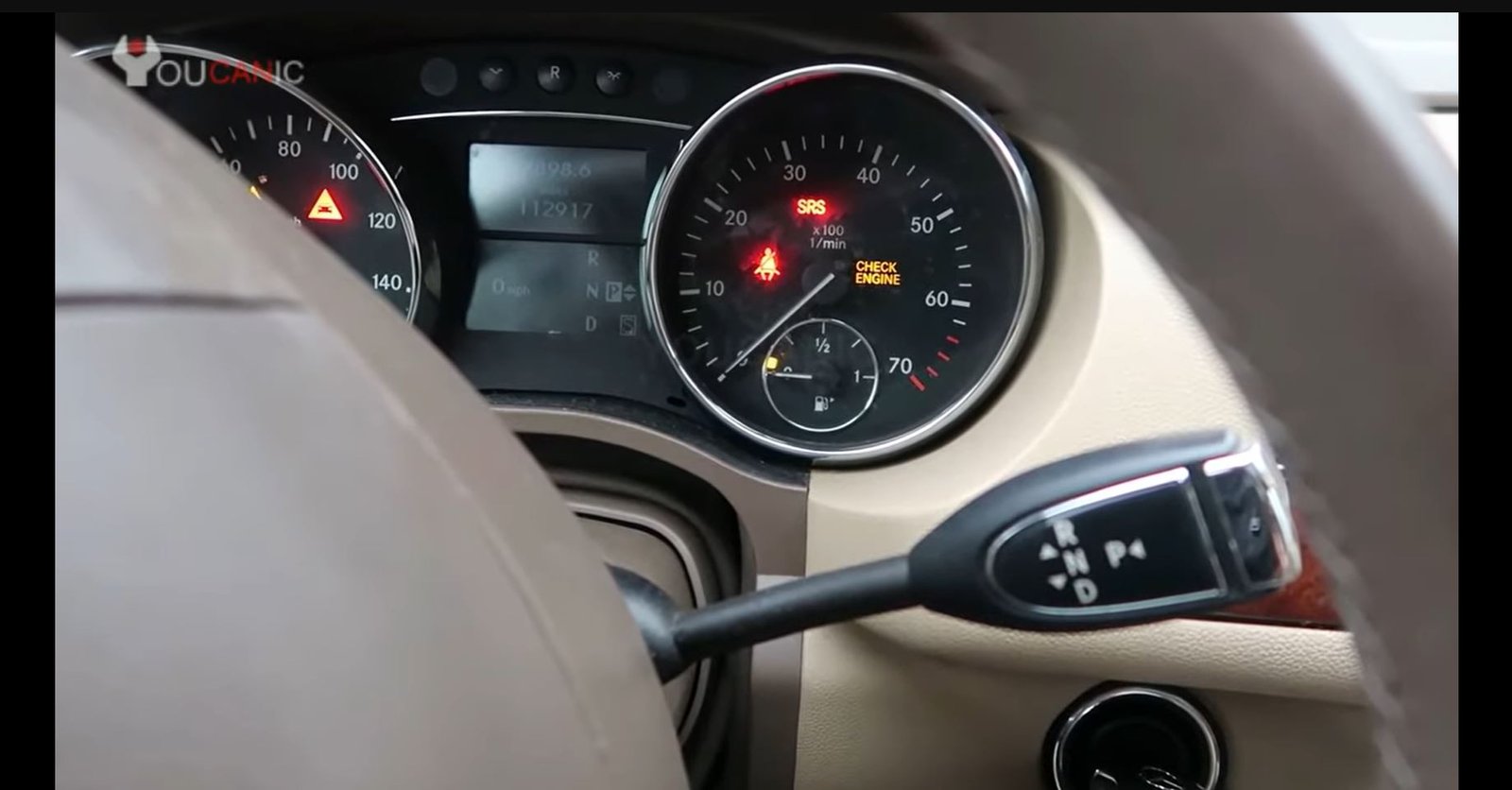
4. Dashboard Battery Warning Light
The illumination of the battery symbol is one of the most direct ways how to tell if your car battery is dying or if the charging system has failed. This light is triggered by the vehicle’s computer when it detects that the voltage output has dropped below a functional threshold.
-
System Alert: It often indicates that the alternator is no longer recharging the battery properly.
-
Urgency: If this light stays on while driving, your car is running solely on the battery’s remaining “reserve capacity,” which will eventually lead to a total stall.
5. Electrical Accessories Work Poorly
Your car’s power features are “canaries in the coal mine” for a bad car battery. When the voltage is inconsistent, the motors and processors that run your cabin features won’t receive the stable current they need to operate at full speed.
-
Performance Lags: You may notice power windows rolling up much slower than usual or a radio that resets itself unexpectedly.
-
Visual Dips: The dashboard needles may flutter or “sweep” erratically during startup, which is a classic symptom of a dying car battery.
6. Car Needs Frequent Jump Starts
If you are wondering how to know if your car battery is dead for good, look at your recent history with jumper cables. A battery that requires a jump start more than once in a week has likely suffered internal cell damage that prevents it from holding a charge.
-
Chemical Fatigue: Repeated jump starts indicate the lead plates inside the battery are “sulfated,” meaning they can no longer store energy chemically.
-
Alternator Stress: Relying on jump starts forces your alternator to work overtime, which can eventually cause it to burn out as well.
7. Battery Voltage Reading Below Normal
Using a multimeter is the most scientific method for how to tell if car battery needs replacing. A battery that looks fine on the outside may actually be “hollow” in terms of its electrical pressure (voltage).
The Gold Standard A healthy, fully charged battery should read approximately 12.6V when the engine is off.
-
The Fail Mark: If your reading is consistently below 12.2V, the battery is only at 50% capacity; if it drops below 10V, it typically has a dead cell and must be replaced.
thought
Here is the rewrite of the final battery warning signs, integrated into a cohesive guide on how to tell if your car battery is dying. Each section uses a paragraph style with strategic breaks and focuses on the core technical symptoms.
8. Battery Older Than Three Years
Time is the most predictable factor when learning how to tell if your car battery is dying. While some high-end units can push further, the vast majority of lead-acid batteries have a chemical “shelf life” of roughly three to five years under normal driving conditions.
As a battery ages, the internal lead plates undergo a process called sulfation, which gradually reduces the surface area available for chemical reactions. Even if the battery appears to be working, its capacity to hold a deep charge diminishes every year. Once you hit the three-year mark, your vehicle is officially in the “replacement window,” making it the perfect time to start monitoring for other bad car battery symptoms.
9. Swollen or Misshaped Battery Case
A physically bloated battery is a visual “code red” for any driver. If the straight, plastic sides of the casing look like they are bulging or inhaling, you have found one of the most dangerous ways how to know if your car battery is dead or on the verge of a catastrophic failure.
This structural deformity is usually caused by extreme heat or overcharging, which leads to internal gas buildup that the battery’s vents cannot handle. Because the casing is under high pressure, a swollen battery is a significant safety hazard. It is highly susceptible to leaking acid or, in rare cases, exploding if a spark ignites the trapped hydrogen gas, making immediate replacement the only safe option.
10. Rotten Egg Smell Near the Hood
Catching a whiff of sulfur or “rotten eggs” while checking your oil is a definitive sign of a bad car battery. This pungent odor is the result of hydrogen sulfide gas being released as the sulfuric acid inside the battery begins to boil or leak through damaged seals.
This chemical breakdown often occurs when a battery is failing internally or being “cooked” by a faulty alternator that is sending too much voltage. Beyond the unpleasant smell, these acidic vapors can cause rapid corrosion on your engine’s electrical connectors and metal brackets. If you smell sulfur, your battery is likely in its final hours of operation and requires professional attention to protect your car’s charging system.
Comparison of Critical Battery Failure Indicators
| Indicator | How to Detect | Why it Means the Battery is Dying |
| Age | Check the “Ship Date” sticker | Chemical capacity naturally fades after 3 years. |
| Physical Shape | Visual inspection of the case | Internal gas buildup has warped the structural integrity. |
| Odor | Sulfur/Rotten egg smell | Leaking sulfuric acid is venting dangerous gases. |
| Terminal Health | White/Blue ashy buildup | Acid off-gassing is preventing a clean electrical connection. |
When you are learning how to tell if your car battery is dying, the symptoms often extend beyond a simple failure to start. As a battery reaches the end of its functional life, it begins to exhibit erratic behavior that affects how the vehicle maintains power during and after the ignition process.
Understanding these three specific signs—corrosion, stalling, and rapid discharge—can help you diagnose a bad car battery before you find yourself stranded in a parking lot.
11. Corrosion on Battery Terminals
One of the most common visual indicators for how to know if your car battery is dead or failing is the presence of a crusty, ashy substance on the metal terminals. This buildup, which usually appears as white, ashy powder or blue-green crystals, is a physical manifestation of the battery’s internal chemistry “leaking” out in gaseous form.
As a battery ages or undergoes thermal stress, it releases small amounts of hydrogen gas. When this gas reacts with the metal of the terminals and the moisture in the air, it creates lead sulfate or copper sulfate. This corrosion acts as a high-resistance insulator; essentially, it creates a “wall” between your battery and your car’s electrical system.
If you see heavy buildup, it is a primary symptom of a dying car battery because it forces the alternator to work harder to push electricity into the battery. While you can clean the terminals with a wire brush and baking soda, persistent corrosion often indicates that the seals around the battery posts have failed, signifying that it is time for a replacement.
12. Car Starts Then Stalls Quickly
It is a common misconception that the battery’s job ends once the engine is running. However, if your car starts but then stalls almost immediately, it is a subtle way how to tell if your car battery needs replacing. In modern vehicles, the battery acts as a “buffer” or stabilizer for the entire electrical grid.
When you first start the car, the ignition system puts a massive strain on the battery. If the battery is weak, the voltage may drop so low during that initial crank that the Engine Control Unit (ECU) or the fuel pump doesn’t receive enough constant voltage to keep the engine running once it catches.
Furthermore, a bad car battery can develop an internal “short.” This short circuit creates an erratic electrical load that confuses the car’s computer. If the computer detects that the voltage is fluctuating too wildly to safely power the spark plugs or fuel injectors, it may shut the engine down to prevent damage. If your car struggles to “catch” and stay idling, the battery’s ability to stabilize the system is likely compromised.
13. Battery Fails After Short Parking Time
The ultimate test of a battery’s health is its “reserve capacity” its ability to hold a charge while the car is turned off. If you find that your car starts fine after a long drive but refuses to start after being parked for just 30 minutes at a grocery store, you are experiencing a classic sign of how to tell if your car battery is dying.
A healthy battery should be able to hold its “resting voltage” (ideally around 12.6V) for days or even weeks. However, as the internal lead plates become coated in hard sulfate crystals, the battery loses its ability to store energy. It might show a surface charge while the alternator is running, but as soon as the engine stops, that charge “bleeds off” almost instantly.
This rapid discharge is often mistaken for a light being left on, but if it happens repeatedly, it confirms that the battery can no longer chemically retain electricity. When a battery reaches this stage, it has lost its structural integrity, and no amount of driving or external charging will permanently fix the issue.
Diagnosing Terminal and Discharge Issues
| Symptom | Observation | Technical Reason |
| Terminal Corrosion | White/Blue crusty buildup | Acid off-gassing creates an insulating barrier. |
| Start-and-Stall | Engine dies seconds after start | Voltage instability causes the ECU to fail. |
| Rapid Discharge | Dead after 30-60 mins of parking | Sulphated plates cannot hold a chemical charge. |
| Flickering Accessories | Lights dim when windows move | Battery cannot handle simultaneous loads. |
14. Alternator Works But Battery Fails
One of the most confusing parts of vehicle maintenance is realizing that a car can have a perfectly healthy alternator but still fail to start. This scenario is a primary indicator of how to tell if your car battery needs replacing rather than the charging system. The alternator’s job is to generate electricity while the engine is running, providing power to the electronics and sending a “trickle” back to the battery to refill it.
However, if the battery’s internal cells are damaged or “sulfated,” they lose the ability to store that incoming energy. You might drive for an hour—giving the alternator plenty of time to work—only to find the car won’t restart five minutes after you turn it off. In this case, the alternator is doing its job, but the battery is like a bucket with a hole in the bottom; no matter how much “juice” you pour in, it won’t stay. This is a definitive way how to know if your car battery is dead because it can no longer hold the charge provided to it.
15. Cold Weather Makes Starting Harder
Winter is often the “executioner” of weak batteries. If you notice your car struggling to turn over only when the temperature drops, it is a classic symptom of a dying car battery. This happens because of a two-fold problem caused by the cold:
-
Chemical Slowdown: Low temperatures slow down the chemical reactions inside the battery, significantly reducing its “Cold Cranking Amps” (the burst of power needed to start the engine).
-
Increased Resistance: Cold oil becomes thicker and more viscous, meaning the engine requires more power to turn over at the exact moment the battery has less to give.
A healthy battery has enough reserve to overcome this, but an aging one will fail. If your car groans or hesitates on a chilly morning, the cold isn’t the cause—it’s just the test that your battery failed. This is a vital sign of how to tell if your car battery is dying before it leaves you stranded in a winter storm.
Final Diagnostic Comparison
| Environmental Sign | What You See/Hear | Why It Happens |
| Alternator Bypass | Car runs fine but won’t restart | The battery has zero charge retention. |
| Cold Snap Failure | Slow “moaning” crank in the morning | The chemical reaction is too weak for the cold. |
| Voltage Drop | Interior lights dim when you turn the key | The battery cannot handle the initial load. |
Conclusion: Final Verdict on a Dying Battery
Identifying how to tell if your car battery is dying boils down to being observant of the small changes in your vehicle’s behavior. Whether it is the visual warning of a swollen case, the audible cue of a slow engine crank, or the physical reality of a three-year-old battery failing in the cold, these signs are your car’s way of asking for maintenance.
Ignoring a bad car battery doesn’t just risk a breakdown; it puts unnecessary strain on your starter and alternator, potentially turning a simple battery swap into a multi-hundred-dollar repair. If you experience two or more of the symptoms mentioned in this guide, the most cost-effective and safest move is to have the battery tested and replaced.
Frequently Asked Questions (FAQs)
Q: How many years does a car battery usually last? A: On average, a car battery lasts between 3 to 5 years. Factors like extreme heat, frequent short trips, and vibration can shorten this lifespan significantly.
Q: Why does my car click but won’t start? A: This is usually because the battery has enough power to engage the starter solenoid (the click) but lacks the “Cold Cranking Amps” (CCA) to actually spin the engine.
Q: Can a car battery die overnight? A: Yes. This is usually due to a “parasitic draw” (like a light left on) or an internal short circuit within one of the battery’s six cells.
Q: Is 12 volts enough to start a car? A: Surprisingly, no. A battery at 12.0V is actually considered almost fully discharged. A healthy battery should read 12.6V when the engine is off.
Q: Can I jump-start a swollen battery? A: No. A swollen battery is a sign of internal gas buildup. Attempting to jump-start it can cause a spark that ignites the gas, leading to an explosion or acid spray.

- Find the Right Engine Oil for Your Car: A Quick Guide - March 1, 2026
- Car Battery Booster Basics: Start Your Vehicle in Minutes - March 1, 2026
- How Long Does It Take To Charge A Motorcycle Battery Charging Time Guide - February 28, 2026