
How to diagnose brake noise while driving
Brake noise while driving can be confusing and stressful, especially when your car still seems to stop normally. Squealing, grinding, clicking, or rattling sounds during braking are often early warning signs that something in the braking system needs attention. Knowing how to diagnose brake noise while driving can help you identify whether the sound is harmless such as moisture on the rotors or a sign of worn brake pads, damaged brake discs, or a more serious safety issue.
Brake noises can occur when pressing the brake pedal, braking at low speeds, accelerating, or even while driving without touching the brakes. Each sound tells a different story. In this guide, we’ll break down the most common brake noise examples, explain what causes them, and help you determine whether the noise is coming from the brakes, wheel bearings, or other components. By understanding these sounds early, you can avoid costly repairs and stay safe on the road.
2. What Are the 3 Types of Brake Noises?
Most brake issues fall into three distinct categories based on the frequency and physical cause of the sound.
2.1 Squealing or Screeching
This is a high-pitched, piercing sound that typically occurs when the brakes are applied. It is the most common brake noise and is often a designed warning.
-
Worn Brake Pads: Most modern pads have a small metal tab called a wear indicator. When the friction material gets too thin (usually around 2–3mm), this tab scrapes the rotor to warn you.
-
Glazed Rotors or Pads: Overheating can cause the brake material to “crystallize” into a smooth, glassy surface. This reduces friction and causes high-frequency vibrations that sound like a squeal.
-
Environmental Factors: Cold weather or moisture can cause a thin layer of surface rust on rotors overnight, leading to a temporary squeak that disappears after a few stops.
2.2 Grinding
A deep, metallic grinding or growling sound is a red flag. This indicates that the friction material is completely gone.
-
Metal-on-Metal Contact: The steel backing plate of the brake pad is now grinding directly against the iron rotor.
-
Damaged Brake Discs: Continuous grinding will “score” or gouge the surface of the rotors, making them unsafe and more expensive to repair.
-
Debris: Occasionally, a small stone or piece of road debris can get lodged between the pad and rotor, causing a localized grinding sound.
2.3 Clunking, Rattling, or Thumping
These are lower-frequency sounds often related to the movement of heavy components rather than just friction.
-
Loose Hardware: If anti-rattle clips, shims, or caliper bolts are loose or missing, the pads may “bounce” within the assembly, causing a click or rattle.
-
Caliper Issues: A seized or loose caliper can cause a heavy “clunk” when you first apply pressure.
-
Suspension vs. Brakes: If you hear a thumping over bumps even when not braking, the issue is likely a worn ball joint or strut rather than the brakes themselves.
3. Noise When Pressing the Brake Pedal
If the noise only occurs specifically when the pedal is in motion, the problem may lie deeper in the hydraulic or mechanical linkage system.
| Symptom | Potential Cause |
| Hissing Sound | Likely a leak in the brake booster vacuum diaphragm. |
| Clicking/Snapping | Usually related to worn caliper hardware or shifting brake pads. |
| Pulsating/Thumping | Often caused by warped rotors (the rotor is no longer perfectly flat). |
| Sinking Pedal with Noise | Can indicate a failing master cylinder or a hydraulic fluid leak. |
Is it your brakes or a wheel bearing?
A quick way to tell: if the noise changes pitch when you turn the steering wheel, it is likely a wheel bearing. If the noise changes or stops specifically when you press the brake pedal, the issue is almost certainly the brake system.
Common Brake Noises and What They Mean
This video provides a clear visual and auditory guide to identifying common brake sounds like squealing and grinding to help you diagnose your car’s specific issue.
4. Noise When Braking at Low Speed
Low-speed braking creates a specific mechanical environment. Because the vehicle’s momentum is lower, the friction and vibration patterns differ from high-speed stops.
-
Common Causes: Most low-speed squeals are caused by high-frequency vibrations between the pad and the rotor. In stop-and-go traffic, heat can build up, slightly changing the friction level and causing a “groan.”
-
Stick-Slip Brake Noise: This occurs when the brake pads alternate rapidly between “sticking” to the rotor and “slipping” past it. It sounds like a low-frequency groan or creak, often heard just as the car comes to a complete halt or when you slowly creep forward in a parking lot.
-
Rust on Rotors: If your car sits overnight (especially in humid or rainy weather), a thin layer of surface rust forms. The first few low-speed stops of the morning will sound like a “shhh” or light scraping until the pads “scrub” the rotors clean.
5. Brake Noise While Driving but Brakes Feel Fine
It is frustrating when your brakes work perfectly but still make noise. This doesn’t always mean a failure is imminent.
-
Performance Pads: High-performance or “semi-metallic” pads contain more metal fibers for better stopping power. These fibers are naturally noisier than ceramic materials.
-
Environmental Factors: Dust, road salt, or moisture can get trapped between the pad and the rotor. In dry climates, brake dust accumulation is a leading cause of “non-problematic” squeaking.
-
Bedding-In Process: If you just got new brakes, they need a “bedding-in” period. This is when a thin layer of pad material transfers onto the rotor. Until this layer is uniform, you may hear light chirping or squealing.
6. Brake Noise When Accelerating
If you hear a noise that disappears when you press the brake but returns when you accelerate, you are likely dealing with a “loose” component.
-
Loose Brake Pads: If the anti-rattle clips are worn, the pads can shift or vibrate against the rotor while the wheel spins, creating a “ticking” or “chirping” sound. Applying the brakes clamps them into place, silencing the noise.
-
Caliper Slide Pins: If the pins are dry or seized, the caliper might not retract fully, causing the pad to lightly “drag” against the rotor even when you aren’t braking.
How to Tell if Noise is Brakes or Wheel Bearing
Distinguishing between these two can be tricky because both involve the wheel area. Here is a guide to help you tell the difference:
1. The Brake Pedal
The most definitive clue is the brake pedal itself. If the noise changes, stops, or starts the moment you touch the brake pedal, it is a brake issue. For example, a grinding sound that only happens when the pedal is pressed indicates worn-out pads.
2. The Speed and Pitch
A failing wheel bearing typically produces a low-pitched hum, growl, or drone. Unlike brake noise, this sound is constant and changes pitch based on your speed—the faster you go, the higher the “whirring” sound becomes. It will be present whether you are braking, coasting, or accelerating.
3. The Swerve
While driving at a safe, moderate speed (around 30–40 mph), gently sway the car from left to right. If the noise gets louder when you turn one way and quieter when you turn the other, it’s a wheel bearing. This happens because you are shifting the weight of the car onto the damaged bearing. Brake noises typically do not change based on steering direction.
4. The Vibration
-
If you feel a vibration in the steering wheel that increases with speed, it’s often a wheel bearing.
-
If you feel a vibration specifically in the brake pedal only when stopping, it is likely a warped brake rotor.
7. Brake Disc (Rotor) Noise When Braking
The brake disc (or rotor) is the large metal plate that the brake pads clamp onto. Because it is a massive, spinning metal component, any imperfection in its surface leads to distinct sounds and physical feedback.
Warped Brake Rotors
When rotors overheat from aggressive driving or heavy loads, they can “warp” or develop Disc Thickness Variation (DTV). Instead of a smooth surface, the rotor becomes slightly wavy.
-
The Sound: Often heard as a pulsating thumping or a rhythmic “whoosh-whoosh” sound.
-
The Feel: You will feel a distinct vibration in the brake pedal or steering wheel as the pads move in and out over the “high spots” of the warped disc.
Scored or Uneven Brake Discs
If you have driven with worn-out pads, the metal backing plates can “score” or carve deep grooves into the rotor surface.
-
The Sound: This typically results in a constant grinding or scraping noise that occurs every time you apply the brakes.
-
Impact: Scored rotors reduce the surface area available for the pads to grip, significantly increasing your stopping distance.
Rust Buildup on Rotors
Iron rotors rust easily. If a car sits in rain or humidity, a layer of oxidation forms.
-
The Sound: A scratchy, rough noise during the first few stops of the day.
-
The Fix: This is usually harmless; the pads will naturally “scrub” the rust off after 2–3 moderate stops.
8. Brake Noise Spray: Does It Really Work?
“Brake Quiet” or anti-squeal sprays are common DIY solutions, but they are often misunderstood.
What It Is and How It Works
Brake noise spray is typically a synthetic lubricant or dampening compound. It is NOT sprayed onto the front of the pads or the rotors (doing so would be dangerous and ruin your stopping power). Instead, it is applied to the back of the brake pads where they touch the caliper piston.
-
The Goal: It acts as a “buffer” to absorb the high-frequency vibrations that cause squealing.
When It Is Effective
-
New Brake Installs: Using it during a fresh brake job prevents “initial” squeaks.
-
Vibration Issues: If your pads are thick but the shim has come loose, the spray can help glue things back together and dampen noise.
When It’s a Temporary Fix
If your brakes are squealing because the pads are worn down to the metal indicators, spray will do nothing. It is a “comfort” solution, not a mechanical repair.
9. Brake Noise Examples and What They Mean
To help you diagnose your issue quickly, use this descriptive chart to match the sound to the problem.
| Sound | What It Usually Means | Urgency |
| High-Pitched Squeal | Wear Indicator: Your brake pads are reaching their minimum thickness (~25% left). | Moderate: Schedule service soon. |
| Loud Metallic Grind | Metal-on-Metal: Friction material is gone; the pad backing is eating the rotor. | Critical: Stop driving; repair immediately. |
| Rhythmic Clicking | Loose Hardware: A clip, shim, or bolt is loose or the pad is shifting in the bracket. | Low/Moderate: Inspect for loose parts. |
| Hissing (When Pressing) | Brake Booster: A vacuum leak in the power assist system. | High: Harder to stop; check immediately. |
| Thumping/Vibration | Warped Rotors: The rotor surface is uneven or “out of round.” | Moderate: Rotors need resurfacing or replacement. |
Pro Tip: If you’re unsure, try to record the sound on your phone while driving in a safe, quiet area. Playing this for a mechanic can save hours of diagnostic time.
10. How to Tell If the Noise Is Brakes or Wheel Bearing
Distinguishing between a brake issue and a wheel bearing failure is critical because while both are safety concerns, they require completely different repairs.
-
The Steering Test: A wheel bearing noise will almost always change in volume or pitch when you turn the steering wheel. If you are driving straight and veer slightly to the left, and the noise gets louder, the right-side bearing is likely failing (as weight shifts onto it). Brake noise usually remains constant regardless of steering angle.
-
The Brake Pedal Test: If the sound disappears the moment you lightly touch the brake pedal, you are likely dealing with a loose brake pad or a wear indicator. If the sound persists while braking, it points back toward a bearing.
-
Humming vs. Grinding: Wheel bearings typically produce a low-pitched hum or “drone” that sounds like you have off-road tires. Brake noise is usually a higher-pitched squeal or a harsh, scratchy grind.
11. Is It Safe to Drive If Brakes Are Making Noise?
The short answer is: it depends on the sound.
-
Safe to Drive (Temporarily): Light squealing during cold starts or a faint “chirp” usually means your pads are getting low, but you still have a few hundred miles of safe driving left.
-
Stop Immediately: If you hear heavy grinding (metal-on-metal) or if you feel a pulsing/vibration through the pedal accompanied by a “spongy” feel, your braking distance is compromised. This is a safety hazard to you and others on the road.
-
Risks of Ignoring Noise: What starts as a $150 pad replacement can quickly turn into a $600 repair if a worn pad ruins the rotor or if a seized caliper causes your brakes to overheat and fail entirely.
12. What Does It Sound Like When Brakes Are Going Bad?
Brake failure is rarely silent. Your car will “talk” to you as the system degrades:
-
Early Warning (The Squeal): High-pitched and intermittent. It tells you the friction material is thin.
-
Advanced Wear (The Scraping): A constant “shhh” sound while driving that gets louder when braking.
-
Severe Failure (The Grind/Growl): A deep, vibrating noise that sounds like gravel in a blender. This means your stopping power is significantly reduced.
13. Why Is My Car Making a Noise When I Brake?
If you are hearing noises during braking, it is usually a result of one of three systems failing:
-
The Brakes: Worn pads, warped rotors, or a sticking caliper.
-
The Suspension: Worn bushings or struts that “clunk” when the weight of the car shifts forward during a stop.
-
The Drivetrain: A failing CV joint that clicks when you decelerate and turn simultaneously.
14. How to Diagnose Brake Noise While Driving
Diagnosing brake noise doesn’t always require a lift and air tools. You can perform a highly effective “sensory audit” from the driver’s seat. Here is your step-by-step diagnostic guide.
Phase 1: The Auditory Audit
Start by driving at low speeds ($15-20$ mph) in a quiet area, ideally next to a wall (which reflects sound back to you).
-
Roll down your windows. Does the sound come from the front or the back? Front-end noise is usually felt in the steering wheel; rear-end noise is often heard but not felt.
-
Identify the rhythm. Is the noise constant, or does it happen once per wheel revolution? A rhythmic sound usually indicates a warped rotor or a “high spot” on the disc.
Phase 2: The Physical Feedback Test
Pay close attention to what your feet and hands are feeling.
-
The “Spongy” Pedal: If the noise is accompanied by a pedal that feels soft or sinks to the floor, you likely have air in your brake lines or a failing master cylinder.
-
The Vibration Test: If the car shakes when you brake at high speeds (e.g., exiting a highway), your rotors are likely warped. This vibration is the “noise” you feel rather than hear.
Phase 3: The Stationary Inspection
Once parked, perform a visual check.
-
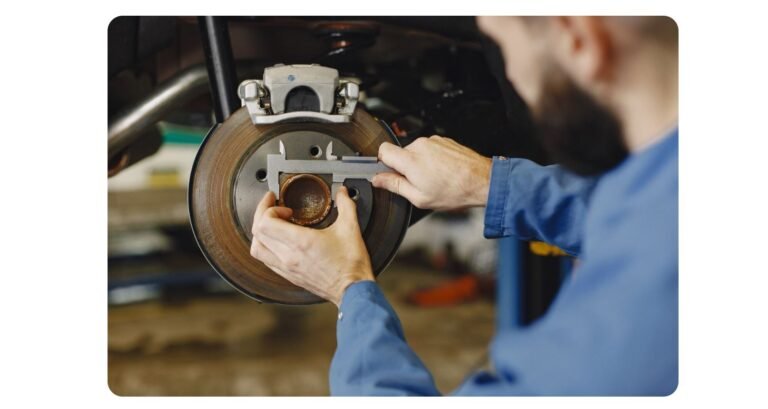
Check the Rotors: Look through your wheel spokes (as seen in the image you provided). Are the discs shiny and smooth, or do you see deep circular grooves (scoring) or dark blue patches (heat spots)?
-
Check the Dust: An unusual amount of black dust on one wheel compared to the others often indicates a “stuck” caliper that is wearing that specific pad down prematurely.
Phase 4: Determining the Next Step
-
DIY Fix: If you find light surface rust or a small stone trapped in the dust shield, you can often clear it yourself.
-
Professional Required: If the noise is metallic grinding, if the car pulls to one side when braking, or if the brake warning light is on, a professional inspection is mandatory.
Prevention Tip: To avoid these noises in the future, always opt for high-quality ceramic pads and ensure your mechanic uses anti-seize lubricant on the caliper slide pins during every brake service.

- Find the Right Engine Oil for Your Car: A Quick Guide - March 1, 2026
- Car Battery Booster Basics: Start Your Vehicle in Minutes - March 1, 2026
- How Long Does It Take To Charge A Motorcycle Battery Charging Time Guide - February 28, 2026