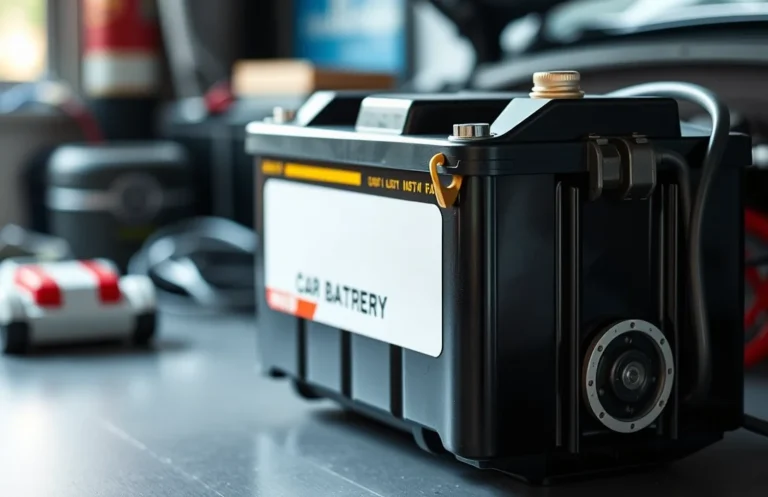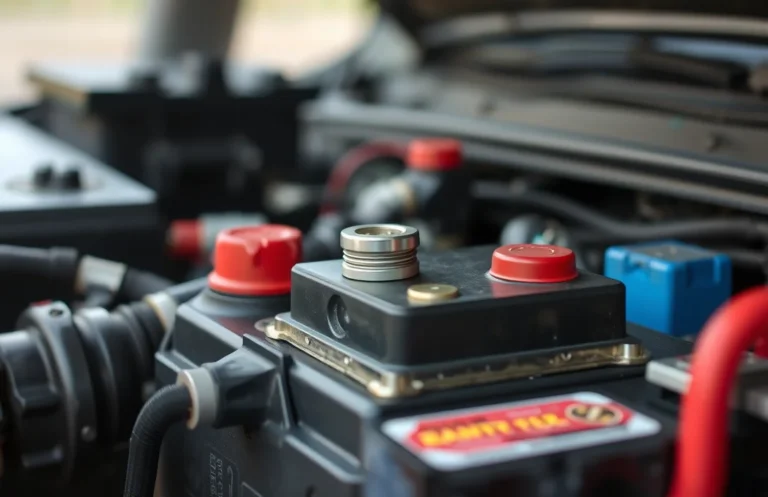

Hot Weather Affects Your Car Battery
Hot weather can be just as damaging to your car battery as freezing temperatures. Many drivers don’t realize that hot weather affects your car battery by accelerating internal wear, reducing battery life, and increasing the risk of sudden failure. In this guide, we explain how extreme heat impacts car batteries, answer common questions like does heat affect battery life, and share practical tips to prevent battery damage during hot summer months.
To help you understand why summer can be more lethal to your vehicle than winter, here is a breakdown of how thermal stress impacts your charging system.
1. How Hot Weather Affects Your Car Battery
Why heat is harder on batteries than cold: While most drivers fear the winter freeze, hot weather affects your car battery much more severely. Cold weather increases the “work” a battery must do by thickening engine oil, but heat actually attacks the battery’s internal chemistry. High temperatures accelerate the chemical reactions inside the casing, leading to overcharging and internal damage that is often irreversible.
What happens inside a battery at high temperatures: When the ambient temperature rises, the liquid electrolyte solution inside the battery begins to heat up. This increases the internal pressure and can lead to a condition called “thermal runaway,” where the battery generates more heat than it can dissipate. This process fundamentally alters the lead plates, making them less efficient at holding a charge once the weather eventually cools down.
2. Does Heat Affect Car Batteries?
Increased chemical activity inside the battery: If you are wondering does heat affect car batteries, the answer lies in Arrhenius’ Law, which states that chemical reactions happen faster at higher temperatures. In a car battery, this means the natural self-discharge rate increases significantly. A battery sitting in a hot engine bay effectively “uses itself up” much faster than one kept in a temperate environment.
Faster degradation of internal components: Heat causes the lead grids inside the battery to corrode at an accelerated rate. As these grids break down, the electrical path is restricted, reducing the battery’s ability to deliver the high amperage needed to start the engine. This internal decay is why a battery that worked perfectly in July might suddenly fail on the first mild day of September.
Why heat shortens overall battery lifespan: The structural damage caused by high heat cannot be undone. Every “heat event” where the battery is exposed to extreme temperatures permanently reduces its total capacity. This is why batteries in desert climates typically last only 2–3 years, whereas the same battery model might last 5 years in a cooler, northern climate.
3. Automotive Battery Gets Very Hot
Normal operating temperature vs overheating: Under the hood, temperatures can easily exceed 140°F. While batteries are designed to handle some engine heat, when an automotive battery gets very hot due to external weather combined with engine heat, the liquid electrolyte (a mix of water and sulfuric acid) begins to evaporate. Once the fluid level drops, the tops of the lead plates are exposed to air, leading to rapid oxidation.
Loss of battery capacity and power output: As the water evaporates, the acid concentration becomes too high, which further damages the internal components. You may notice your car struggling to start or electronics acting erratically. When an automotive battery gets very hot, it loses its “reserve capacity,” meaning it has less energy stored for those times when the alternator isn’t running, such as when you’re listening to the radio with the engine off.
4. Does Temperature Affect Battery Life?
Ideal temperature range for car batteries: Batteries are like humans; they are happiest at around 77°F (25°C). When asking does temperature affect battery life, it is important to know that for every 15°F increase over that ideal temperature, the life of a lead-acid battery is effectively cut in half. Sustained exposure to triple-digit heat acts as a “fast-forward” button on the battery’s expiration date.
Why batteries fail earlier in hot climates: In regions with extreme summers, the constant thermal expansion and contraction of the internal lead plates cause them to warp and shed their active material. This sediment builds up at the bottom of the battery and can eventually cause a short circuit. This is why “North” vs. “South” battery ratings exist; southern batteries are specifically built with more electrolyte to combat the inevitable evaporation caused by the sun.
The Invisible Killer of Car Batteries
When most people think of battery failure, they picture a car stuck in a snowbank. However, the reality is that the damage is almost always done months earlier during the peak of summer. Understanding how hot weather affects your car battery is essential for any vehicle owner looking to avoid a mid-summer breakdown on a sweltering highway.
Heat is the silent enemy of automotive electronics. While a cold battery is simply “sluggish,” a hot battery is actively decomposing. From the evaporation of vital fluids to the warping of internal lead grids, the science behind how does temperature affect battery life proves that heat is a relentless force. By recognizing the signs of an automotive battery gets very hot, such as a “rotten egg” smell or a bulging casing, you can replace your battery on your own terms before the summer heat leaves you stranded.
To wrap up the analysis on thermal impact, it is crucial to understand that heat is not just a temporary stressor—it is a permanent catalyst for degradation. Here is how your vehicle handles extreme temperatures.
5. Car Battery Overheating in the Sun
Effects of Direct Sunlight on Battery Temperature
While a battery is tucked under the hood, a car battery overheating in the sun is a very real phenomenon. Dark-colored car hoods act as thermal collectors, absorbing solar radiation and radiating that heat directly onto the battery casing. This can raise the temperature under the hood to 30–50 degrees above the ambient air temperature, pushing the battery far beyond its safe operating limit.
Engine Bay Heat vs. External Heat
The battery faces a double-sided attack: the internal heat generated by the engine’s combustion and the external heat from the pavement and sun. When these two forces combine, the battery’s cooling vents may become overwhelmed. Unlike the engine, which has a radiator, the battery relies purely on airflow; if the car is idling in traffic, the stagnant air accelerates the process of a car battery overheating in the sun.
Warning Signs of Overheating
A battery that is succumbing to the sun will often show physical distress. You may notice a bloated or “swollen” appearance as internal gases expand the plastic casing. Additionally, you might see “sweating” or moisture on the top of the battery, which is actually the electrolyte solution being forced out of the vents.
6. Does Extreme Heat Affect Batteries Long-Term?
Increased Self-Discharge in Hot Weather
When asking does extreme heat affect batteries, the most significant long-term impact is the “leakage” of energy. All batteries self-discharge over time, but heat acts as a chemical accelerator. A battery stored at 90°F will discharge twice as fast as one stored at 70°F, leading to a state of deep discharge that can permanently reduce the battery’s total life cycles.
Internal Corrosion Caused by Heat
High temperatures speed up the oxidation of the lead plates inside. This corrosion thins the plates and reduces the surface area available for the chemical reaction. Even after the weather cools down, this physical damage remains; the “skinny” plates can no longer provide the high Cold Cranking Amps (CCA) needed for winter, explaining why a battery “damaged” in the summer often fails during the first autumn chill.
Risk of Permanent Battery Damage
The ultimate answer to does extreme heat affect batteries is found in the sediment tray. As plates corrode and expand/contract due to heat, bits of lead flake off and fall to the bottom of the battery. If enough sediment accumulates, it can touch the bottom of the plates and create a short circuit, instantly killing the battery and making it impossible to recharge.
7. Can Extreme Heat Affect Cars Beyond the Battery?
Impact on Alternator and Charging System
The question can extreme heat affect cars extends well beyond the battery. The alternator, which contains sensitive diodes and copper windings, becomes less efficient as it gets hotter. High heat increases electrical resistance, meaning the alternator has to work harder to produce the same amount of power, which can lead to it burning out prematurely.
Heat-Related Electrical Issues
Extreme heat can cause the protective insulation on wiring to become brittle or for connectors to expand and loosen. This leads to “phantom” electrical issues, such as flickering dashboard lights or sensors that provide false readings. When you ask can extreme heat affect cars, you must consider the entire electrical grid, which is under maximum strain during the summer due to high-speed cooling fans and air conditioning usage.
Why Battery Problems Increase in Summer
Summer is a season of high electrical demand. Between the A/C compressor, the radiator fans running at full speed, and the natural chemical degradation caused by the sun, the charging system is pushed to its absolute limit. Most “summer breakdowns” are simply the result of a system that was already weak finally giving way under the pressure of the heat.
8. What Kills a Car Battery Faster in Hot Weather?
Overcharging Due to Heat Stress
High temperatures lower the internal resistance of the battery, which can trick the vehicle’s voltage regulator into sending too much current. This overcharging is primarily what kills a car battery in the summer; it causes the internal components to cook, leading to structural warping and a total loss of chemical balance.
Electrolyte Evaporation
The liquid inside a battery is a mixture of water and sulfuric acid. When the engine bay reaches extreme temperatures, the water component of the electrolyte literally evaporates through the vent caps. This leaves the lead plates exposed to the air, causing them to dry out and stop functioning, which is a leading factor in what kills a car battery prematurely.
Corrosion at Terminals
Heat accelerates the oxidation process on the metal battery posts. This creates a crusty, insulating layer of lead sulfate that blocks the flow of electricity. If you are investigating what kills a car battery, don’t ignore the terminals; even a healthy battery can’t start a car if the “gateway” is blocked by heat-induced corrosion.
Infrequent Driving in Hot Conditions
Leaving a car parked in the sun for long periods is a silent killer. Batteries naturally self-discharge, but in hot weather, this rate doubles. Without the alternator running to replenish the charge, the battery enters a state of “deep discharge,” which is often what kills a car battery during long summer vacations.
9. Does Heat Affect Battery Life Compared to Cold Weather?
Heat vs. Cold: Which is Worse?
When asking does heat affect battery life, the scientific consensus is that heat is the “killer” and cold is the “executioner.” Cold weather makes a battery struggle to provide power (temporary), but heat causes permanent internal damage (permanent). You are far more likely to experience a shorter lifespan in a hot climate than in a freezing one.
Short-Term vs. Long-Term Damage
Cold weather causes short-term performance issues; once the battery is warmed up, it usually works fine. However, does heat affect battery life long-term? Absolutely. Heat causes physical shedding of the active material on the lead plates. Once that material falls to the bottom of the casing, it can never be put back, meaning the battery’s maximum capacity is lowered forever.
Why Summer Damage Shows Up in Winter
This is the great irony of automotive maintenance. A battery “damaged” by the summer heat may have enough power to start a car in 80°F weather. However, the moment the temperature drops, that damaged battery no longer has the strength to overcome the cold. So, while it fails in January, the answer to does heat affect battery life is proven by the fact that the summer sun did the actual damage months earlier.
10. Signs Your Battery Is Damaged by Heat
Slow Engine Cranking
One of the most common signs of a battery struggling with thermal damage is a sluggish start. When the internal components have been degraded by high temperatures, the battery cannot deliver the high burst of energy required to turn the starter motor. If you notice your engine “groaning” or turning over slowly on a hot afternoon, it is a clear indicator that the heat has compromised the battery’s power output.
Swollen Battery Case
A physically bloated or misshapen battery is a definitive sign of heat-related failure. High temperatures cause the internal lead plates to expand and the electrolyte fluid to off-gas. If the battery’s vents cannot keep up with this internal pressure, the plastic casing will bulge outward. A swollen case means the battery is structurally compromised and potentially dangerous.
Corrosion Buildup
Heat accelerates the chemical reaction that causes white or ashy-blue powder to form on the battery terminals. This corrosion acts as an insulator, preventing the alternator from charging the battery and stopping the battery from powering the car. Excessive buildup on the posts is a direct symptom of the battery “sweating” acidic vapors due to extreme heat exposure.
Frequent Jump-Starts
If your vehicle requires multiple jump-starts in a short period during the summer, the battery has likely lost its ability to hold a charge. Heat-induced sulfation creates a permanent barrier on the internal plates. Once this occurs, the battery can no longer store electricity chemically, regardless of how long you drive or how often you try to recharge it.
11. How to Protect Your Car Battery in Hot Weather
Parking in Shaded Areas
The simplest way to protect your battery is to reduce its exposure to direct solar radiation. Parking in a garage, under a carport, or even in the shadow of a building can significantly lower the temperature under the hood. By keeping the vehicle out of the direct sun, you prevent the “oven effect” that leads to electrolyte evaporation and internal warping.
Using Battery Heat Shields
Many modern vehicles come equipped with a plastic or felt-like sleeve around the battery. This is a battery heat shield, and its purpose is to reflect radiant heat from the engine away from the battery cells. If your car is missing this shield, or if you live in a particularly hot climate, installing an aftermarket thermal blanket can extend your battery’s life by several years.
Regular Inspections and Cleaning
Proactive maintenance is key to heat survival. Every few months, you should inspect the battery for signs of leakage or terminal corrosion. Cleaning the terminals with a mixture of baking soda and water prevents high-resistance buildup, ensuring that the battery can receive a full charge from the alternator even when the heat is making the system less efficient.
Monitoring Battery Age
Understanding the “age” of your battery is your best defense against a heat-related breakdown. Since heat acts as a catalyst for decay, a battery that is 3 to 4 years old is at high risk during a heatwave. By keeping track of the installation date, you can choose to replace the battery on your own schedule rather than waiting for the sun to leave you stranded.
12. When to Replace a Battery in Hot Climates
Average Lifespan in Extreme Heat
While a battery in a temperate climate might last 5 years, the average lifespan in extreme heat drops significantly to between 2 and 3 years. In places like Florida, Arizona, or the Middle East, the high ambient temperature accelerates internal corrosion and fluid evaporation so aggressively that a battery may even fail within 18–24 months. If your battery is approaching the 3-year mark in a hot region, it is statistically nearing the end of its reliable life.
When Testing Isn’t Enough
A battery can sometimes “pass” a voltage test but still be on the verge of failure. Heat causes internal lead plates to thin out; while they may hold a surface charge of $12.6\text{V}$, they lack the structural integrity to provide the massive amperage needed for a “hot start” (restarting the car after it has been sitting in the sun). If your battery is over 3 years old and you experience even one sluggish start, testing isn’t enough—the physical degradation is already too far gone.
Proactive Replacement Recommendations
In hot climates, the best strategy is proactive replacement. Waiting for a total failure often means being stranded in dangerous $100^\circ\text{F}+$ temperatures. Experts recommend replacing your battery every 3 years regardless of performance. If you notice the “rotten egg” smell or a slight bloating of the case, replace it immediately, as these are signs that the internal chemistry has become unstable.
13. Frequently Asked Questions (Bing SERP Booster)
Can heat alone kill a car battery?
Yes. Heat is arguably the #1 killer of car batteries. While cold slows down a battery, heat causes permanent chemical changes, such as electrolyte evaporation and grid corrosion. Even if the battery isn’t being used, extreme heat increases the “self-discharge” rate, effectively draining the battery’s life while the car is parked.
Why does my battery fail every summer?
If you find yourself replacing batteries annually, you likely have a combination of high ambient heat and an overcharging problem. Heat can cause the voltage regulator to malfunction, forcing the alternator to “cook” the battery. Additionally, short trips in summer are lethal because the A/C and cooling fans pull maximum power, but the short drive time doesn’t allow the alternator to replenish the battery’s already heat-stressed cells.
Is a swollen battery dangerous?
Yes, a swollen battery is extremely dangerous. A bloated case indicates that internal gases (hydrogen) have built up and cannot escape. This means the battery is under high pressure and is at risk of leaking acid, venting toxic fumes, or in rare cases, exploding. If your battery is swollen, do not attempt to jump-start it; have it professionally replaced immediately.
How hot is too hot for a car battery?
The ideal operating temperature for a car battery is around $25^\circ\text{C}$ ($77^\circ\text{F}$). Once under-hood temperatures exceed $60^\circ\text{C}$ ($140^\circ\text{F}$), the internal components begin to decompose. For every $10^\circ\text{C}$ ($18^\circ\text{F}$) increase over the ideal temperature, the life of the battery is effectively cut in half.
14. Final Takeaway
The primary threats in summer are electrolyte loss, internal plate corrosion, and case swelling. Unlike winter damage, which is often temporary, summer damage is cumulative and permanent. Once the fluid evaporates or the plates warp, the battery’s capacity is gone forever, even if the weather cools down.
Importance of Regular Checks
In hot climates, you should inspect your battery at every oil change. Look for “sweating” on the casing, white ashy corrosion on the terminals, and any signs of bloating. Because heat damage is often silent, these physical inspections are your best defense against an unexpected breakdown.
Simple Steps to Extend Battery Life
You can significantly extend your battery’s life by parking in the shade, ensuring your heat shield is properly installed, and keeping the terminals clean. By reducing the thermal load and electrical resistance, you allow the battery to operate as efficiently as possible, even when the thermometer is spiking.
| Factor | Moderate Climate | Hot Climate (90∘F+) |
| Typical Lifespan | 4–6 Years | 2–3 Years |
| Main Failure Cause | Gradual Capacity Loss | Fluid Evaporation & Corrosion |
| Replacement Cycle | Every 4–5 Years | Every 3 Years (Proactive) |

- Find the Right Engine Oil for Your Car: A Quick Guide - March 1, 2026
- Car Battery Booster Basics: Start Your Vehicle in Minutes - March 1, 2026
- How Long Does It Take To Charge A Motorcycle Battery Charging Time Guide - February 28, 2026