How a Car Battery Tester Works: Step-by-Step Guide for You
Understanding how a car battery tester works can be incredibly useful. If you’ve ever been stranded due to a dead battery, you know the importance of testing its health. This device can help you avoid those frustrating situations and ensure your vehicle runs smoothly.
A car battery tester measures voltage, cold cranking amps, and internal resistance to determine the battery’s condition. By connecting the tester to the battery terminals, you can quickly assess whether your battery needs charging or replacing, ensuring your vehicle remains reliable.
Car Battery Tester Basics
A car battery tester is a device specifically designed to assess the condition and performance of a vehicle’s battery. Understanding how these testers work is crucial for maintaining battery health, ensuring reliable vehicle operation, and preventing unexpected breakdowns.
Car battery testers come in various types, including simple voltage testers and more advanced load testers. They evaluate factors such as voltage, charge capacity, and internal resistance. Regular testing can help identify weak batteries before they fail, allowing for timely replacements and avoiding potential issues while on the road. Proper battery maintenance contributes to overall vehicle performance and longevity.
How Battery Testers Operate
Battery testers function on fundamental electrical principles that assess the voltage and capacity of a car battery. These devices measure specific parameters to evaluate the health and performance of the battery, providing insights into whether it can hold a charge adequately and support the vehicle’s electrical systems.
Most battery testers operate by applying a load to the battery and measuring how it responds. This process typically involves three key steps: measuring the open-circuit voltage, applying a specific load, and analyzing the voltage drop during the load test. The open-circuit voltage indicates the battery’s state of charge, while the load test reveals its ability to maintain voltage under stress.
During testing, if the voltage drops significantly below a threshold value when the load is applied, it signifies that the battery may be weak or failing. Some advanced testers also incorporate diagnostic features that provide information about the battery’s overall health, such as internal resistance and cold cranking amps (CCA), which are critical for starting an engine in cold conditions. Understanding these operational principles is essential for effectively diagnosing battery performance issues.
Key Components of Testers
Understanding the essential components of a car battery tester is vital for grasping how it functions effectively. Each part plays a specific role in evaluating the battery’s condition, ensuring accurate readings and reliable performance.
Key components include:
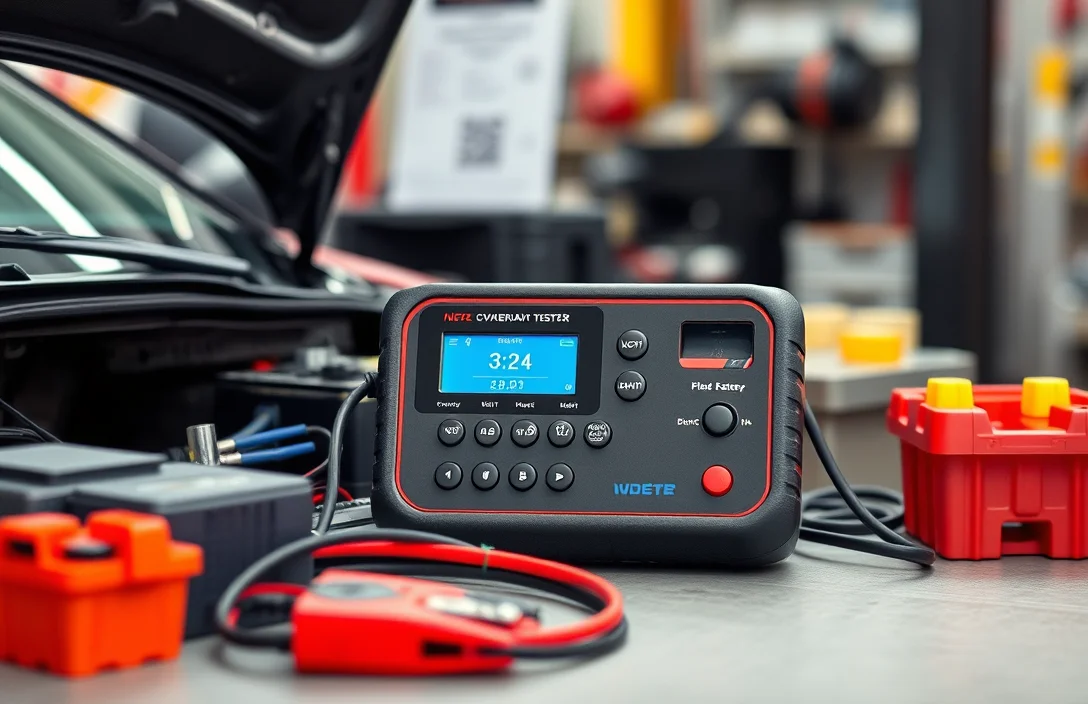
- Display Screen: This provides visual feedback on the tester’s readings, showing information such as voltage, condition, and capacity.
- Probes: These are the connectors that attach to the battery terminals, allowing the tester to measure voltage and conduct tests effectively.
- Microprocessor: The brain of the tester, it processes data received from the probes and interprets it to provide accurate results.
- Resistor: Used for load testing, this component simulates the battery’s usage under load conditions to assess its performance.
- Power Source: Some testers are powered by the battery being tested, while others may have an internal rechargeable battery.
- Calibration Controls: These allow the user to adjust settings for different types of batteries, ensuring accurate measurements across various models.
Each of these components contributes to the tester’s ability to provide reliable battery assessments, making them crucial for effective vehicle maintenance.
Testing Methods Explained
Understanding the various testing methods employed by car battery testers is essential for accurate assessments. Different techniques are used to evaluate battery health, capacity, and overall performance. Here are the primary methods used in car battery testing.
- Load Testing: This method simulates the battery’s performance under load conditions. A load tester applies a predetermined load to the battery while measuring voltage. If the voltage drops significantly during this test, it indicates that the battery may not hold a charge effectively.
- Static Voltage Test: This involves measuring the open-circuit voltage of the battery without any load. A multimeter is commonly used for this test. The voltage reading can provide an initial indication of the battery’s state of charge; however, it doesn’t reflect the battery’s ability to perform under load.
- Conductance Testing: Conductance testers assess the battery’s ability to conduct current, which is directly related to its overall health. This method is quick and can determine the state of charge and the condition of the battery without applying a load.
- Hydrometer Test: For lead-acid batteries, a hydrometer can measure the specific gravity of the electrolyte. This method provides insight into the state of charge and the overall health of the battery. It’s particularly useful for flooded lead-acid batteries.
Techniques for Accurate Testing
Accurate testing with a car battery tester requires specific techniques to ensure reliable results. Proper preparation and adherence to best practices can prevent misleading readings and help diagnose battery health effectively.
Begin by ensuring the battery is fully charged and has been at rest for at least an hour before testing. This allows the battery to stabilize and provides a more accurate reading. Additionally, clean the battery terminals with a mixture of baking soda and water to remove any corrosion, which can affect electrical conductivity.
While testing, maintain a consistent connection between the tester leads and the battery terminals. Secure the positive lead to the positive terminal and the negative lead to the negative terminal firmly. Avoid touching the leads together or allowing them to contact any metal surfaces during the test, as this can cause short circuits or inaccurate readings.
Follow the manufacturer’s instructions for the tester being used, as different models may have unique calibration requirements. After completing the test, compare the results against the specifications for your battery type, and consider conducting multiple tests to confirm findings. This comprehensive approach will enhance the reliability of your battery testing outcomes.
Common Tester Types
Understanding the various types of car battery testers is crucial for selecting the right tool for your needs. Each type serves specific purposes and offers distinct features that cater to different testing scenarios.
| Tester Type | Features | Best Use |
|---|---|---|
| Digital Multimeter | Measures voltage, current, and resistance. | General electrical diagnostics and troubleshooting. |
| Load Tester | Applies a load to the battery and measures voltage drop. | Testing battery capacity under load conditions. |
| Conductance Tester | Uses high-frequency signals to measure internal resistance. | Quick assessment of battery health and life expectancy. |
| Smart Battery Tester | Provides detailed analysis and battery status via a screen. | Comprehensive diagnostics and health monitoring. |
Choosing the right tester depends on your specific requirements. For general troubleshooting, a digital multimeter is sufficient, while load testers are better for in-depth capacity checks. Conductance testers offer rapid evaluations, and smart testers provide advanced insights for proactive maintenance.
Battery Tester Case Studies
Real-world applications of car battery testers illustrate their effectiveness in diagnosing battery health. These case studies highlight various scenarios where testers provided critical insights, leading to informed decisions and improved vehicle performance.
One case involved a fleet of delivery vans experiencing frequent battery failures. Technicians employed a load tester to evaluate each battery’s capacity under simulated conditions. The results revealed that several batteries were unable to hold charge effectively, prompting timely replacements that increased fleet reliability and reduced downtime.
In another instance, a car enthusiast used a digital multimeter to assess battery voltage and condition before a long road trip. The tester indicated a lower than optimal voltage level, leading to preventive measures such as recharging the battery. This proactive approach ensured that the vehicle operated smoothly throughout the journey, avoiding potential breakdowns.
Finally, a DIY mechanic faced issues with starting a classic car. By utilizing a battery tester, he discovered corrosion on the terminals, which impaired connectivity. Cleaning the terminals restored proper function, demonstrating how a simple tester can save both time and money in vehicle maintenance.
Quick Summary
- A car battery tester measures the voltage and condition of a vehicle’s battery.
- It can determine if a battery is charged, weak, or needs replacement.
- Most testers use a simple voltmeter to gauge the battery’s voltage output.
- Advanced testers can also analyze the battery’s cold cranking amps (CCA) and overall health.
- Battery testers often feature color-coded indicators for easy interpretation of results.
- Regular testing can help prevent unexpected battery failures and extend battery life.
- Some testers are designed for specific battery types, so it’s important to select the right one.
Frequently Asked Questions
What is a car battery tester?
A car battery tester is a device used to evaluate the condition and performance of a vehicle’s battery. It measures key parameters such as voltage, cold cranking amps, and overall health to determine if the battery is functioning properly.
How does a car battery tester work?
The tester typically connects to the battery terminals and uses electrical measurements to assess the battery’s state. It can provide readings on voltage levels and capacity, and some models can also perform load tests to simulate real-world conditions.
What types of car battery testers are available?
There are several types of car battery testers, including basic voltmeters, load testers, and advanced digital testers with microprocessor technology. Digital testers often provide more detailed diagnostics and can store previous test results for comparison.
How do I use a car battery tester?
To use a car battery tester, connect the red lead to the positive terminal and the black lead to the negative terminal of the battery. Follow the instructions for your specific tester model to obtain and interpret the readings accurately.
When should I use a car battery tester?
You should use a car battery tester when you suspect battery issues, such as slow engine cranking or dim headlights. Regular testing can also help you monitor battery health and prevent unexpected failures.

- How Much Engine Oil Does Your Car Need? Find Out Now! - March 16, 2026
- How a Car Battery Tester Works: Step-by-Step Guide for You - March 16, 2026
- How a Car Battery Charger Works: Step-by-Step Guide for Beginners - March 13, 2026