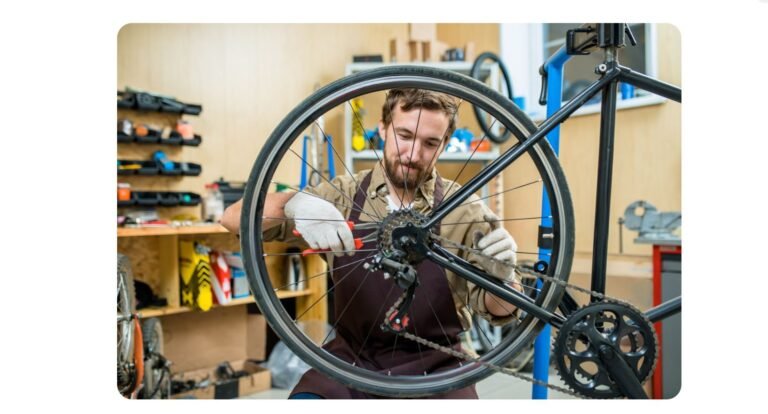
How to Fix Bike Gears Making Noise: Complete Guide
If your bike gears are making noise, you are not alone. Clicking, grinding, skipping, or rattling sounds are among the most common complaints from cyclists of all skill levels from beginners on their first commuter bike to weekend mountain bikers and road racers.
The good news is that most gear noise problems can be fixed at home with basic tools, no advanced mechanical knowledge required.
This guide is written based on practical cycling experience and widely accepted bicycle maintenance principles used by professional bike mechanics across the United States.
Whether you ride a single-speed city bike, a 21-speed hybrid, or a 12-speed carbon road bike, the fundamentals of fixing noisy gears stay the same.
Everything is broken down in plain language so riders of any age from teenagers to seniors can follow along step by step.
By the end of this article, you will know exactly why your gears are making noise, how to diagnose the specific cause, and how to fix it safely and effectively. Let’s get your ride quiet and smooth again.
Why Are Your Bike Gears Making Noise?
Before you grab a wrench, it helps to understand what is actually happening inside your drivetrain. Gear noise is almost always a symptom, not the root cause. Here are the most frequent reasons your bike gears make noise:
- Dirty or dry chain. A chain caked with grit, dust, or old dried-up lubricant creates friction and metallic sounds as it moves over the cassette and chainrings.
- Incorrect cable tension (indexing problems). If the cable controlling your rear derailleur is too tight or too loose, the chain will not sit cleanly on each gear cog. This causes clicking, rubbing, or ghost shifting.
- Bent derailleur hanger. The derailleur hanger is a small aluminum piece connecting your rear derailleur to the frame. Even a slight bend causes the derailleur to sit at the wrong angle, leading to consistent noise.
- Worn chain, cassette, or chainring. Over time, these components develop wear patterns. A worn chain skips over cassette teeth, creating a clunking or skipping sound.
- Misaligned limit screws. Limit screws control how far your derailleur travels. If set incorrectly, the chain rubs on adjacent cogs or the derailleur cage.
- Loose bolts or components. A loose chainring bolt, bottom bracket, or pedal can vibrate and sound exactly like a gear problem even when the gears themselves are perfectly fine.
Understanding which of these applies to your bike will save you time and help you fix the right thing on the first try.
Quick Noise Diagnosis Table
| Noise Type | When It Happens | Most Likely Cause |
|---|---|---|
| Clicking or ticking | Pedaling in one specific gear | Cable tension / indexing off |
| Grinding sound | Under load, especially climbing | Dirty chain or worn drivetrain |
| Chain skipping or jumping | Hard pedaling or high cadence | Worn chain or cassette |
| Rubbing sound | Constantly in several gears | Front derailleur misalignment or bent hanger |
| Clunking on each pedal stroke | One click per revolution | Loose crank, pedal, or bottom bracket |
| Chain falling off | Shifting to extremes | Limit screws out of adjustment |
What Tools and Supplies to Fix Noisy Bike Gears?
You do not need a full mechanic’s shop to fix most gear noise problems. Here is what you should have on hand before you start:
- Chain degreaser. A biodegradable degreaser like Simple Green or a dedicated bike degreaser works well.
- Bike-specific chain lubricant. Use wet lube for wet or muddy conditions, dry lube for dry or dusty riding.
- Clean rags or paper towels. You will use these more than anything else.
- Phillips and flathead screwdrivers. For adjusting limit screws.
- 5mm hex/Allen key. Most derailleur bolts and barrel adjusters use this size.
- Chain wear indicator tool. An inexpensive tool, usually under $10, that tells you if your chain is stretched past its useful life.
- Derailleur hanger alignment tool (optional). If you suspect a bent hanger, a bike shop can check this for you if you do not own the tool.
Most of these tools are available at any bike shop or online retailer. A basic set can cost between $20 and $50, which is a fraction of the cost of a professional tune-up.
How to Clean Chain to Stop Gear Noise
Cleaning the chain is the single most effective thing most riders can do to fix gear noise. It is the right first step before touching any adjustment screws.
Step 1: Shift to the smallest cog and smallest chainring. This puts the least tension on the chain and makes cleaning easier.
Step 2: Apply degreaser to the chain. Hold a rag soaked in degreaser against the chain and pedal backwards several times. Alternatively, use a chain cleaning device that clamps around the chain and scrubs it as you rotate the pedals.
Step 3: Clean the cassette and chainrings. Use a stiff brush and degreaser to scrub between each cog on the cassette. Wipe down the chainrings as well. A folded rag pulled between cogs like dental floss works particularly well for the cassette.
Step 4: Rinse and dry. If using a water-based degreaser, rinse with clean water and dry thoroughly with a rag. Never apply lube to a wet chain.
Step 5: Apply chain lubricant. Apply one drop of lube to each chain link as you slowly pedal backwards. One full revolution of the chain is enough. Let it sit for two to three minutes.
Step 6: Wipe off the excess. Hold a clean dry rag lightly against the chain and pedal backwards again. This removes surface lube that would otherwise attract dirt. Only the lube that has soaked into the chain links is needed.
After cleaning and lubricating, take the bike for a short test ride. In many cases, this one step alone will eliminate the noise entirely.
How to Adjust Bike Gear Cable Tension to Fix Clicking
If cleaning did not solve the problem, cable tension is the next thing to check. When cables stretch over time which they always do the indexing goes off. Indexing means the precise alignment of the derailleur with each gear cog. The fix is quick once you know how.
Find the barrel adjuster. The barrel adjuster is a cylindrical dial located where the cable enters the rear derailleur, and sometimes at the shifter on the handlebars. Turning it is how you fine-tune cable tension without tools.
Understand the direction. Turning the barrel adjuster counter-clockwise, meaning away from the bike, increases cable tension and moves the derailleur toward larger cogs. Turning it clockwise decreases tension and moves it toward smaller cogs.
Identify the specific problem:
- Chain struggles to shift up to a larger cog (lower gear): Turn the barrel adjuster counter-clockwise, one half turn at a time.
- Chain struggles to shift down to a smaller cog (higher gear): Turn the barrel adjuster clockwise, one half turn at a time.
- Chain makes noise in one specific gear: Try a half turn in either direction and test again.
Test after each adjustment. Shift through all gears while pedaling you can do this on a bike stand or by lifting the rear wheel. The chain should shift smoothly and quietly in every gear. Make small adjustments, a quarter or half turn at most, and test before making more changes.
Barrel Adjuster Quick Reference
| Problem | Direction to Turn | Effect |
|---|---|---|
| Chain won’t shift to larger cog | Counter-clockwise (out) | Increases cable tension |
| Chain won’t shift to smaller cog | Clockwise (in) | Decreases cable tension |
| Noise in one specific gear | Half-turn either direction | Fine-tunes indexing |
| Chain shifts two gears at once | Clockwise (in) | Reduces over-tension |
How to Check and Fix a Bent Derailleur Hanger
A bent derailleur hanger is one of the most overlooked causes of persistent gear noise. The hanger is designed to be a sacrificial part — it bends in a crash or fall so that the more expensive derailleur does not break. Even a millimeter of bend is enough to throw your shifting completely off.
Signs of a bent hanger:
- The rear derailleur looks like it leans outward or inward when viewed from directly behind the bike.
- Gears that used to work fine now shift poorly even after cable adjustments.
- The bike recently took a fall or was bumped on the right side.
- Indexing adjustments improve shifting but never fully fix the problem.
What to do. A derailleur hanger alignment tool allows a mechanic to check and straighten the hanger while it is still on the bike. Most local bike shops in the U.S. offer this service for a small fee, usually between $10 and $25. If the hanger is severely bent, it is better to replace it entirely. Replacement hangers typically cost $10 to $30 and are specific to your bike frame model.
Never try to bend a hanger back by hand or with pliers. This creates uneven stress and may snap it or lead to a dangerous mechanical failure while riding.
How to Adjust Limit Screws on Your Rear Derailleur
The limit screws on your rear derailleur control how far the mechanism can travel. There are two of them: the H screw, which controls the high gear or smallest cog, and the L screw, which controls the low gear or largest cog. When these are off, the chain can rub against adjacent cogs or even fall off the cassette entirely.
Checking the H screw (high limit). Shift to your smallest rear cog and smallest front chainring. The derailleur’s upper jockey wheel should align directly below the smallest cog. If the chain rubs on the second-smallest cog, turn the H screw clockwise a quarter turn at a time to tighten it. If the chain is sluggish shifting to the smallest cog, loosen the H screw counter-clockwise.
Checking the L screw (low limit). Shift to your largest rear cog and largest front chainring. The derailleur should guide the chain cleanly onto the largest cog without the chain falling off the inside toward the spokes. If the chain threatens to fall off or makes a grinding sound, tighten the L screw clockwise. If the derailleur struggles to reach the largest cog, loosen it slightly.
The screws are usually labeled H and L directly on the derailleur body. Shimano, SRAM, and Campagnolo derailleurs all follow the same basic principle, so this applies regardless of your component brand.
When to Replace Your Chain, Cassette, or Jockey Wheels
Sometimes gear noise is not a matter of adjustment — it is a matter of worn-out parts. Knowing when to replace components saves you from chasing a noise that no amount of adjusting will fix.
Chain wear. A chain stretches as it wears. A stretched chain does not mesh properly with cassette teeth, causing skipping and noise. Use a chain wear indicator tool. If the tool drops into the chain links beyond the 0.75 mark, it is time for a new chain. Replacing a chain before it reaches 1.0 wear can save your cassette from needing replacement too, which saves money in the long run.
Cassette wear. Look at the cassette teeth from the side. Healthy teeth have a square, symmetrical profile. Worn teeth look like shark fins — they hook forward on one side. If teeth are visibly hooked, the cassette needs replacement. A worn cassette will cause a new chain to skip immediately, so if your cassette is worn, replace both together.
Jockey wheels (derailleur pulleys). The two small plastic wheels on your rear derailleur guide the chain. Worn jockey wheels can become oval-shaped or wobbly, creating noise and inconsistent shifting. Spin each wheel by hand — it should turn smoothly with minimal side-to-side wobble. Replacement jockey wheels cost $5 to $30 and are easy to install with just a Phillips screwdriver.
Component Replacement Reference Guide
| Component | When to Replace | Average Cost (USD) |
|---|---|---|
| Chain | At 0.75 wear indicator or ~1,500–2,000 miles | $20 – $60 |
| Cassette | When teeth are visibly hooked or worn | $25 – $120 |
| Chainring | Hooked or broken teeth, or every 2–3 chain replacements | $15 – $80 |
| Jockey Wheels | When wobbly or oval-shaped | $5 – $30 |
| Derailleur Hanger | After any crash or if bent | $10 – $30 |
| Cables and Housing | Annually or when frayed or kinked | $10 – $25 |
How to Fix Chain Rub on the Cage
While the rear derailleur causes most gear noise issues, the front derailleur can also be a culprit — particularly a rubbing sound that happens in certain gear combinations. This is called front derailleur rub.
What causes front derailleur rub? The front derailleur cage — the two metal plates that the chain passes between — needs to be very close to the chain without actually touching it. If it is too close, the chain rubs as you pedal. Rub is especially common in cross-chain gear combinations, such as the big chainring with the biggest rear cog, or the small chainring with the smallest rear cog. These combinations are best avoided regardless of noise.
How to fix it:
- Shift to the middle gear or the problem gear where rub occurs.
- Use the barrel adjuster at the front derailleur or on the handlebars for the front cable, to move the derailleur cage inward or outward by small increments.
- If the cage is bent or visibly damaged, the derailleur may need replacement.
- Check that the front derailleur is mounted at the correct height. The cage should be approximately 1 to 3mm above the largest chainring teeth.
Front derailleur adjustments are slightly more involved than rear derailleur adjustments, but the same patience-and-test approach applies. Make a small change, then pedal through all gears and listen carefully.
How to Stop Bike Gear Noise Before It Starts
The best way to deal with noisy gears is to prevent them in the first place. A simple maintenance routine keeps your drivetrain running quietly and extends the life of all your components significantly.
- Clean and lube your chain every 100 to 200 miles, or sooner if you ride in wet or muddy conditions. This one habit alone will prevent the majority of gear noise problems.
- Wipe down your cassette and chainrings monthly, even if you do not do a full cleaning. A quick wipe removes grit before it works into the metal and causes wear.
- Check cable tension every few months, especially in the first few months of owning a new bike. Cables stretch significantly when new and need early adjustment.
- Inspect your derailleur hanger after any fall, even if the bike seems perfectly fine. A small bend is hard to see but very easy to feel in your shifting.
- Get a professional tune-up once a year. A bike shop mechanic can catch issues you might miss and perform a full drivetrain inspection in under an hour.
- Replace cables and housing annually. Old cable housing compresses and degrades, causing sluggish, imprecise shifting that often sounds noisy even when nothing else is wrong.
Many bike shops across the U.S. offer annual tune-up packages ranging from $50 to $120. This typically covers all basic adjustments and keeps your bike in safe, quiet running condition year-round.
When Should You Take Your Bike to a Professional Mechanic?
DIY maintenance handles most gear noise situations, but there are times when visiting a local bike shop is the smarter and safer choice. Here are clear signals that it is time for professional help:
- You have tried cleaning, lubricating, and adjusting cable tension, but the noise persists after multiple attempts.
- You suspect the derailleur hanger is bent and do not have an alignment tool.
- Your rear derailleur looks physically damaged — bent, cracked, or with a broken jockey wheel axle.
- The chain skips even after installing a new chain and cassette together.
- The bottom bracket, which is the axle the crankset spins on, feels rough or wobbly. Removing and replacing a bottom bracket requires a specific tool.
- Your electronic shifting system such as Shimano Di2 or SRAM eTap is malfunctioning, as these require firmware tools and specialized knowledge.
Do not feel discouraged about seeking professional help. Even experienced cyclists bring their bikes in for certain jobs. A good mechanic can diagnose and fix a complex shifting problem in under an hour, and you will ride away confident that everything is correct and safe.
Frequently Asked Questions About Noisy Bike Gears
Why does my bike make a clicking noise when I pedal?
A clicking noise when pedaling is almost always related to gear indexing the cable tension is slightly off and the derailleur is sitting between two cogs rather than perfectly on one. Try turning the barrel adjuster a half turn counter-clockwise and test your shifting. Also check for a dry or dirty chain, as this is another very common cause of clicking.
Why does my chain skip when I pedal hard?
Chain skipping under load typically means a worn chain or worn cassette. Use a chain wear tool to check the chain first. If it reads over 0.75, replace it. If the cassette teeth look hooked or uneven when viewed from the side, the cassette needs replacement too. Always replace the chain and cassette together when both are worn for the best result.
How do I stop my bike gears from grinding?
Grinding usually means metal-on-metal contact due to a dirty drivetrain or a misaligned derailleur. Start by cleaning and lubricating the chain and entire drivetrain. If grinding continues, check derailleur alignment and limit screws. Persistent grinding under heavy load may indicate a worn bottom bracket, which should be inspected by a mechanic.
Can I ride my bike if it is making gear noise?
For minor clicking or slight rub, riding a short distance is generally safe. However, do not ignore it — small problems grow into bigger, more expensive ones quickly. If the chain is skipping, slipping, or making loud grinding noises, get it checked before your next ride to avoid damaging other components or experiencing a mechanical failure out on the road.
How much does it cost to fix noisy bike gears?
DIY fixes cost very little — chain lube and a degreaser typically run $10 to $20 total. A professional gear adjustment at a bike shop usually costs $20 to $50. If components need replacement, a new chain costs $20 to $60, a cassette runs $25 to $120, and a full drivetrain overhaul can cost $150 to $400 depending on your component level.
How often should I lube my bike chain?
As a general rule, lube your chain every 100 to 150 miles for dry riding conditions, or after every wet ride. A well-lubed chain runs quietly, shifts smoothly, and lasts significantly longer. If you can hear or feel the chain when riding, it probably needs lube already.
Final Thoughts
Noisy bike gears are frustrating, but they are almost always fixable. Whether the cause is a dirty chain, a stretched cable, a bent derailleur hanger, or simply worn-out components, there is a clear and logical path to solving the problem. The key is to start with the simplest solutions first — clean and lube the chain, then adjust cable tension — before moving on to more complex adjustments like limit screws or component replacement.
Regular maintenance is the real long-term answer. A clean, well-lubricated drivetrain with properly tensioned cables will run quietly for thousands of miles. Taking thirty minutes every couple of months to care for your drivetrain will save you money on repairs, extend the life of your components, and make every single ride more enjoyable.
If you ever feel unsure about a repair, your local bike shop is always there to help. American cycling culture is built around community, and most bike mechanics are genuinely happy to explain what they are doing so you can learn along the way. Now get out there and enjoy a quiet, smooth ride.

- Find the Right Engine Oil for Your Car: A Quick Guide - March 1, 2026
- Car Battery Booster Basics: Start Your Vehicle in Minutes - March 1, 2026
- How Long Does It Take To Charge A Motorcycle Battery Charging Time Guide - February 28, 2026