What Does a Bad Gearbox Sound Like? Complete Guide
Your car is trying to tell you something. That strange whining noise you hear on the highway, the clunk when you shift into reverse, or the grinding that happens every time you change gears these are not random sounds. They are your gearbox communicating that something is wrong.
According to automotive repair data from across the United States, transmission and gearbox failures are among the most expensive repairs a vehicle owner can face. Replacement costs range from $1,800 to over $7,000 depending on the vehicle and severity of the damage. The painful truth is that many of these costly repairs could have been avoided if the warning sounds had been recognized and addressed early.
This guide is written for everyday drivers not mechanics. Whether you drive a manual pickup truck in Texas, an automatic SUV in Ohio, or a family sedan in California, understanding what a bad gearbox sounds like gives you the knowledge to act fast, ask the right questions at the shop, and protect one of the biggest investments you own.
We will walk through every sound a failing gearbox makes, explain what causes each one, identify which sounds are emergencies and which can wait, and help you understand what to do next. All information here is based on established automotive engineering principles and real world repair data trusted by professional technicians.
What Is a Gearbox and Why Does It Make Noise?
Before diving into sounds, it helps to understand what a gearbox actually does. The gearbox, also called the transmission, is the mechanical system that transfers engine power to the wheels. It does this by shifting between different gear ratios either automatically or manually allowing your car to accelerate smoothly from a stop and maintain efficient power at highway speeds.
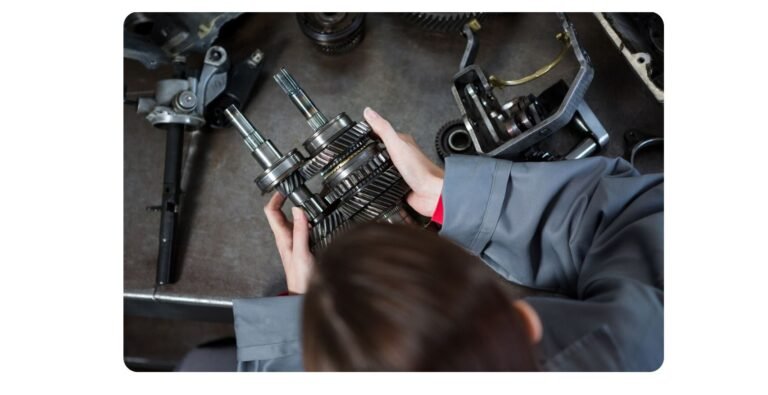
Inside a gearbox are dozens of moving parts: gears, shafts, bearings, clutch packs, synchronizers, seals, and a pump that circulates transmission fluid. When everything is working correctly and properly lubricated, the gearbox operates quietly. When something wears out, breaks, or runs dry of fluid, the metal components begin making contact in ways they should not — and that is when the noise starts.
Understanding which sound points to which component is the foundation of diagnosing gearbox trouble early.
The Main Sounds a Bad Gearbox Makes
Grinding Noise: One of the Most Common Warning Signs
Grinding is the sound most drivers associate with gearbox trouble, and for good reason. It is one of the clearest indicators that something mechanical is failing inside the transmission.
In manual transmissions, grinding typically happens during gear shifts. When you move the gear lever from one position to another and hear a harsh grating sound, it usually means the synchronizers are worn out. Synchronizers are small cone shaped components that match the speed of the gear to the speed of the shaft before engagement. When they wear down, the gears clash rather than mesh smoothly, producing that unmistakable grinding sound.
Grinding in a manual can also be caused by a failing clutch that is not fully disengaging. If the clutch does not release completely, the input shaft keeps spinning when you try to select a new gear, causing metal on metal contact.
In automatic transmissions, grinding is less common but more serious when it occurs. Automatic gearboxes use hydraulic pressure and clutch packs rather than a manually operated clutch. Grinding in an automatic often points to worn internal clutch packs, debris circulating in the fluid, or severe low fluid conditions where components are not being lubricated.
If you hear grinding in your gearbox, do not ignore it. This sound usually means mechanical wear is already occurring, and continued driving will accelerate damage significantly.
Whining or Humming: The Most Misunderstood Gearbox Sound
Whining and humming are high pitched sounds that many drivers initially mistake for tire noise or wind noise. The difference is important: tire noise typically changes with road surface, while a gearbox whine tends to be consistent and often changes with vehicle speed rather than road conditions.
The most common cause of whining in a gearbox is worn or damaged bearings. Inside your transmission, multiple bearings support the rotating shafts. As these bearings wear, their ability to roll smoothly deteriorates and they begin to produce a continuous whine or hum. The pitch of the sound often rises as vehicle speed increases, which is a key diagnostic clue.
Low transmission fluid is another major cause of whining. Gearbox fluid serves as both a lubricant and a coolant. When fluid levels drop — due to a leak, a worn seal, or simply neglect — metal components run without adequate lubrication and begin to generate friction noise. This kind of whining often appears gradually and gets worse over time.
In automatic transmissions specifically, a whining sound can also come from the transmission pump, which circulates fluid throughout the system. A failing pump will often produce a distinctive whine that may be more noticeable at idle or low speeds.
The good news about whining is that it is usually an early warning. Caught quickly, low fluid or early bearing wear can often be addressed before catastrophic failure occurs.
Clunking or Banging: A Sound That Demands Immediate Attention
A clunking or banging sound from the transmission area is one of the more alarming noises a driver can experience. These sounds are usually loud, sudden, and hard to ignore.
Clunking when shifting into drive or reverse is a particularly common complaint. This often indicates worn transmission mounts. The mounts hold the transmission to the vehicle chassis and absorb the torque shock of gear engagement. When they deteriorate, the entire transmission shifts slightly under load, producing a clunk. While mount issues are less expensive to fix than internal transmission problems, they should still be addressed promptly.
A clunking or knocking sound during acceleration or deceleration can point to worn universal joints (U joints) on the driveshaft, or worn CV joints on front wheel drive vehicles. Though these are not technically inside the gearbox, they are part of the drivetrain system and produce sounds easily confused with transmission noise.
Internal clunking or banging is the most serious category. This occurs when damaged or broken gear teeth, worn planetary gears in an automatic, or debris inside the transmission housing causes metal components to collide. This level of damage often signals that a major repair or full replacement is needed.
Buzzing: A Sound Specific to Automatic Transmissions
A buzzing or vibrating sound is most commonly associated with automatic transmission problems. Unlike manual gearboxes, automatics rely heavily on hydraulic systems, valve bodies, and solenoids to control gear changes.
A buzzing sound in an automatic transmission often indicates:
A faulty torque converter. The torque converter is the component that replaces the manual clutch in automatic vehicles, using fluid coupling to transfer power. When its internal components — particularly the needle bearings or stator — wear out, a buzzing or whirring sound develops, often most noticeable at low speeds or when the vehicle is stationary in drive.
A stuck or dirty solenoid. Solenoids are electromagnetic valves that control fluid flow to different parts of the automatic transmission. When they stick or become clogged with debris from dirty fluid, they can create buzzing sounds alongside rough or delayed shifts.
A clogged transmission filter. The filter prevents debris from circulating through the hydraulic system. When it becomes blocked, fluid flow is restricted, creating pressure irregularities that can produce buzzing sounds.
Whirring or Whirring That Changes With Speed
A whirring sound — distinct from a whine in that it has a more mechanical, spinning quality — often points to a specific component: the output shaft bearing or the differential in rear wheel drive vehicles. This sound typically increases in intensity with vehicle speed and may disappear or change when you coast without throttle input.
In front wheel drive vehicles, a whirring that intensifies during turns can indicate CV joint issues rather than internal gearbox problems, though the distinction matters for repairs.
Rattling: The Noise That Often Gets Ignored
Rattling from the transmission area is perhaps the most commonly dismissed gearbox sound. Drivers often attribute it to loose heat shields or exhaust components — and sometimes they are right. But a rattle that consistently occurs at specific RPM ranges, during gear changes, or when the transmission is under load deserves closer inspection.
Common causes of transmission rattling include:
Worn gear teeth that make brief contact during operation. Loose internal snap rings or clips. Planetary gear play in automatic transmissions. Low fluid allowing components to slap or vibrate against each other during normal operation.
How Manual and Automatic Gearboxes Sound Different
Understanding whether you have a manual or automatic transmission changes how you interpret gearbox sounds significantly.
| Sound Type | Manual Transmission | Automatic Transmission |
|---|---|---|
| Grinding | Worn synchronizers or clutch | Worn clutch packs or debris |
| Whining | Worn bearings or low fluid | Low fluid, pump failure, or bearings |
| Clunking | Worn mounts, broken gear | Worn mounts, torque converter |
| Buzzing | Uncommon | Solenoid or torque converter |
| Rattling | Gear tooth wear, low fluid | Planetary gear wear |
| Humming | Bearing wear | Bearing wear or pump |
Manual transmissions tend to make sounds that are more directly linked to driver input. If a grinding only happens when you shift, it is almost certainly synchronizer or clutch related. If a whine only appears in one specific gear, it often points to the gear pair or bearing associated with that gear.
Automatic transmissions can be trickier to diagnose by sound alone because many of their internal operations happen without direct driver input. A sound that appears randomly might be linked to a solenoid misfiring, irregular hydraulic pressure, or a component that only engages in certain driving conditions.
Other Warning Signs That Accompany Bad Gearbox Sounds
Sound is rarely the only symptom of a failing gearbox. Pay attention to these additional signs that frequently accompany transmission noise.
Gear Slipping
The engine revs increase as if you have accelerated, but the vehicle does not actually speed up proportionally. This “slipping” sensation means the transmission is not maintaining a solid connection between engine and wheels. It can feel like briefly driving on ice before traction returns.
Delayed Engagement
You shift into drive or reverse, but there is a noticeable pause before the vehicle begins to move. This lag, sometimes lasting one to three seconds, indicates the hydraulic pressure is not engaging the clutch packs or bands quickly enough — usually due to low fluid or worn internal components.
Trembling or Shaking During Shifts
A healthy automatic transmission shifts almost imperceptibly. If you feel the vehicle shudder, vibrate, or jerk when changing gears, the internal clutch packs may be slipping or the transmission fluid may be degraded and unable to provide smooth hydraulic action.
Burning Smell
Transmission fluid that is overheating produces a distinct burning odor, somewhat similar to burning oil but with a slightly different chemical quality. Overheating fluid loses its lubricating and cooling properties rapidly, accelerating internal wear. This smell often accompanies heavy towing, stop and go city driving in hot weather, or a low fluid condition.
Check Engine Light
Modern vehicles have sensors throughout the drivetrain that monitor transmission performance. When something falls outside normal parameters — temperature, pressure, shift timing, solenoid function — the transmission control module (TCM) logs a fault code and triggers the Check Engine light or a dedicated Transmission Warning light. A diagnostic scan at any auto parts store or shop can read these codes and point toward the specific system causing concern.
Visible Fluid Leak
Transmission fluid is typically bright red when new, becoming darker brown as it ages. If you see red or brown fluid spots under your vehicle, especially toward the middle or rear of the car, a transmission seal or gasket may be leaking. Low fluid from a leak is one of the most common reasons gearboxes develop noise.
Is It Normal to Hear Your Car Shift Gears?
This is one of the most commonly searched questions related to gearbox sounds, and the answer depends on your vehicle and the sound itself.
In most modern vehicles, gear changes in an automatic transmission should be nearly silent and imperceptible. You might notice a very slight change in engine tone as the RPMs drop during an upshift, but you should not hear a mechanical sound from the gearbox itself.
In manual transmissions, some mechanical sounds are normal. A light clicking or the feel of the gear engaging is expected. Drivers who are still learning may hear some gear clash if they shift too quickly before matching revs. However, consistent grinding, clunking, or whining is not normal regardless of skill level.
Age and mileage matter. A vehicle with 150,000 miles on its original transmission may exhibit some additional noise compared to a new car simply due to general wear. However, any new sound that appears suddenly, or any existing sound that gets progressively louder, should be investigated.
What to Do When You Hear Gearbox Noises
Step 1: Check the Transmission Fluid Level and Condition
This is the first and simplest thing to check. Many vehicles have a transmission dipstick (though some sealed modern transmissions do not). Pull the dipstick with the engine warm and running (for most vehicles — check your owner’s manual). The fluid should be at the correct level and be a clear to light reddish color. Dark brown or black fluid with a burnt smell indicates the fluid needs immediate replacement.
Step 2: Note When the Sound Occurs
Before visiting a mechanic, pay attention to the details. Does the sound happen at a specific speed? Only during shifts? Only when cold? Only when turning? Only under acceleration? The more specific information you can provide, the easier the diagnosis.
Step 3: Avoid Heavy Towing or Demanding Driving
If you suspect transmission problems, avoid putting additional strain on the system. Heavy towing, aggressive driving, or extended city traffic in hot weather all increase stress on a potentially compromised gearbox.
Step 4: Get a Professional Diagnosis
A qualified transmission technician can connect a diagnostic scanner to read fault codes, perform a fluid inspection, and conduct a road test to identify the source of the noise. In some cases, a simple fluid service can resolve the issue. In others, more extensive internal repair may be needed.
Step 5: Get Multiple Quotes for Major Repairs
If a major repair is recommended, it is completely reasonable to seek a second opinion or multiple quotes from different shops. Transmission repair pricing varies significantly between general mechanics and specialized transmission shops.
How Long Can You Drive With a Noisy Gearbox?
This question does not have a single answer — it depends entirely on the cause of the noise.
A mild whine from slightly low transmission fluid might allow safe driving for a short period while you schedule a service appointment. A clunking noise from worn mounts is usually not an immediate breakdown risk but should be repaired soon.
However, a grinding sound during every shift, a clunking that worsens rapidly, a burning smell, or a slipping transmission are conditions where continued driving risks complete transmission failure. In a worst case scenario, sudden transmission failure at highway speed can create a dangerous situation.
The safest approach is always to treat new transmission noises as urgent and have them professionally evaluated within a few days at most.
Preventing Gearbox Problems Before They Start
Most gearbox failures are not sudden events. They develop over time due to fluid degradation, neglected maintenance, and accumulated wear. Following these practices significantly extends transmission life.
Regular fluid changes are the single most important maintenance action. Most manufacturers recommend automatic transmission fluid replacement every 30,000 to 60,000 miles, though many newer vehicles claim longer intervals. Consult your owner’s manual and consider more frequent changes if you drive in severe conditions.
Avoid aggressive driving habits that stress the gearbox, particularly coming to a full stop before shifting between drive and reverse, and not riding the clutch in manual vehicles.
Have fluid leaks repaired promptly. Even a slow drip can eventually lower fluid to dangerous levels.
Pay attention to early warning sounds. A whine addressed early might require only a fluid service. The same whine ignored for 20,000 more miles might result in bearing failure requiring internal rebuild.
Frequently Asked Questions About Gearbox Sounds
What noise does a failing gearbox make most commonly?
The most commonly reported sound is a whining or humming that increases with vehicle speed, typically caused by worn bearings or low transmission fluid.
Can low transmission fluid cause noise?
Yes. Low fluid is one of the most common causes of transmission whining, humming, and in severe cases, grinding. It reduces lubrication across all internal components simultaneously.
Is a clunking sound always serious?
Not always. A clunk when shifting into gear is sometimes caused by worn transmission mounts, which is a moderate repair. However, internal clunking from damaged components is a serious issue requiring prompt attention.
Can I add transmission fluid myself?
In many vehicles with a dipstick, yes. Use the exact fluid specification listed in your owner’s manual, as using the wrong type can cause damage. Sealed transmissions require professional service for fluid changes.
Does a bad gearbox always make noise?
No. Some transmission failures manifest primarily as slipping, delayed engagement, or shifting problems without significant noise. However, noise is the most common early warning sign.
Final Thoughts: Listen to Your Car
The sounds your gearbox makes are not inconveniences they are diagnostic information. A car that grinds during shifts, whines on the highway, or clunks into gear is telling you that something needs attention. The difference between catching a gearbox problem early and facing a complete transmission replacement is often just a matter of whether the driver paid attention to the warning signs.
Whether the sound is a subtle hum you noticed last week or a grinding that appeared this morning, the right move is always the same: take it seriously, check the basics, and get a professional evaluation before minor issues become major ones. Your gearbox works harder than almost any other component in your vehicle — and with proper attention, it will continue doing its job reliably for hundreds of thousands of miles.

- Find the Right Engine Oil for Your Car: A Quick Guide - March 1, 2026
- Car Battery Booster Basics: Start Your Vehicle in Minutes - March 1, 2026
- How Long Does It Take To Charge A Motorcycle Battery Charging Time Guide - February 28, 2026