
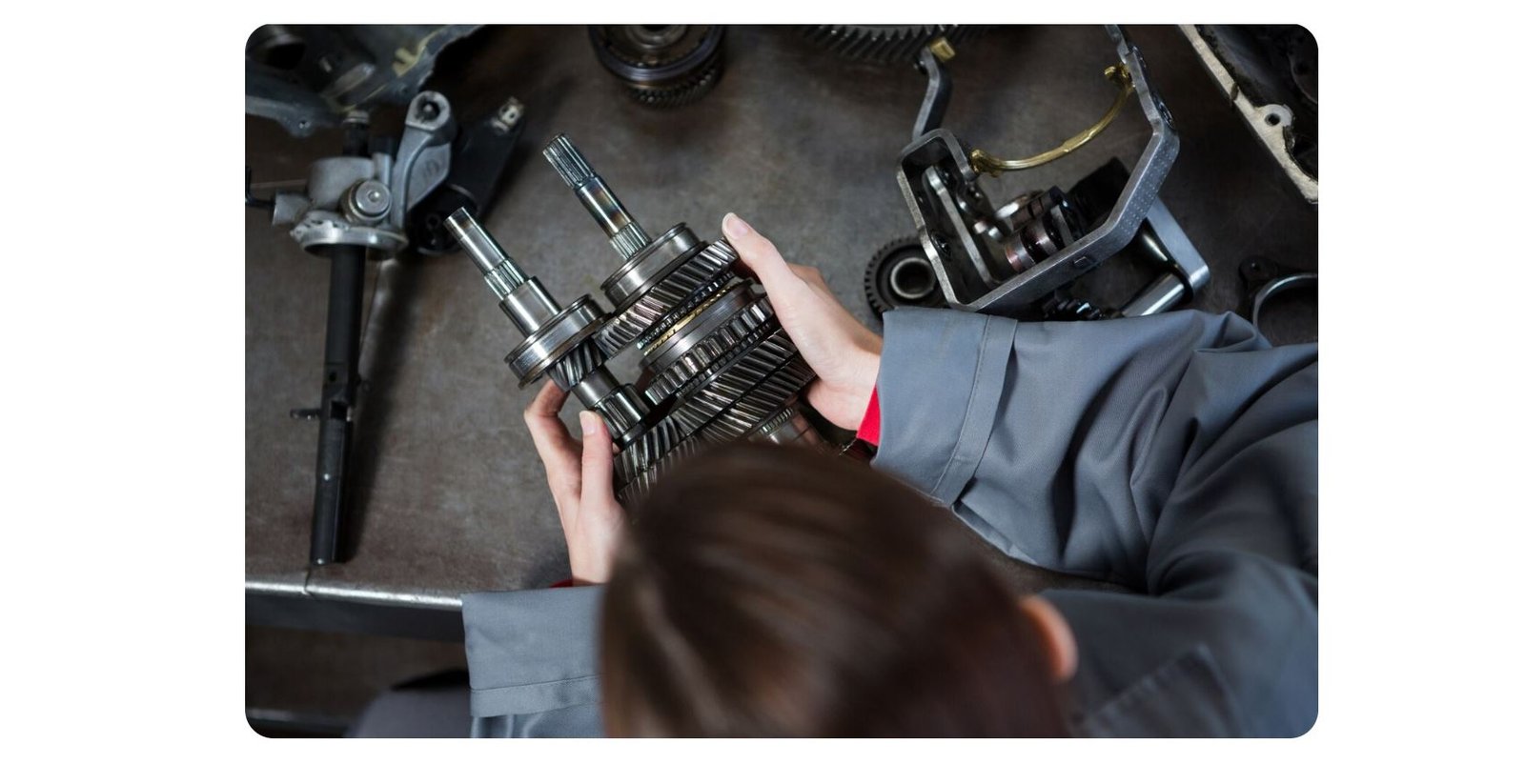
Which Type of Transmission Lasts the Longest? Complete Guide
Standing on a car lot choosing between manual, automatic, or CVT? That decision could cost — or save you thousands.
Transmission replacement is one of the most expensive repairs a vehicle owner faces, often running $2,500 to $8,000. Choosing the wrong type can mean early failure, costly repairs, and constant frustration.
This guide breaks down which transmission lasts the longest manual, traditional automatic, CVT, dual-clutch, or automated manual using real-world reliability data and mechanical insight.
You’ll learn what fails, why it fails, and how to make your transmission last as long as possible so you can buy smarter and avoid expensive surprises.
Which Type of Transmission Lasts the Longest?
Manual transmissions generally last the longest of any transmission type currently in widespread use.
A well-maintained manual gearbox on a properly driven vehicle routinely reaches 200,000 to 250,000 miles, and in many documented cases exceeds that significantly.
Some manual transmissions in light-duty trucks and older vehicles have been documented running well past 300,000 miles with nothing more than fluid changes and occasional clutch replacements.

The reason comes down to mechanical simplicity. A manual transmission has fewer moving parts, generates less heat under normal operation, and does not rely on a complex hydraulic system to function.
When something does wear out most commonly the clutch assembly it is a relatively inexpensive and straightforward repair compared to the internal failures that plague automatic and CVT transmissions.
Here is how all major transmission types rank by typical lifespan:
| Transmission Type | Average Lifespan (Miles) | Complexity Level | Primary Failure Cause |
|---|---|---|---|
| Manual (MT) | 200,000 – 300,000+ | Low | Clutch wear, driver abuse |
| Traditional Automatic (AT) | 150,000 – 200,000+ | High | Overheating, fluid neglect |
| Dual-Clutch (DCT) | 150,000 – 200,000 | Medium-High | Clutch pack wear, software issues |
| Automated Manual (AMT) | 150,000 – 200,000 | Medium | Actuator failure, clutch wear |
| Continuously Variable (CVT) | 100,000 – 150,000 | Medium-High | Belt/chain wear, heat damage |
These are average figures for well-maintained transmissions under normal driving conditions. Real-world lifespans can be dramatically shorter with neglect or aggressive driving, and longer with exceptional care.
How Manual Transmissions Work
To understand why manual transmissions outlast their competitors, you need to understand what they are and what they are not.
A manual transmission is a purely mechanical device. The driver operates a clutch pedal to temporarily disconnect the engine from the gearbox, selects a gear using a shift lever connected by cables or rods to the transmission, then releases the clutch to re-engage engine power.
Inside the gearbox, a set of hardened steel gears mesh together directly. Power flows through them with minimal complexity no pumps, no solenoids, no valve bodies, no planetary gear sets, and no torque converter.
This simplicity is the foundation of their durability. There are fewer components to fail. The components that are present are robust, proven engineering that has existed in roughly the same form for over a century.
Internal gears in a modern manual transmission are case-hardened steel that, when properly lubricated, can run for hundreds of thousands of miles without significant wear.
The clutch assembly is the main consumable component. A clutch disc is a friction component it wears every time you engage and disengage it and it typically needs replacement every 60,000 to 100,000 miles depending on driving style.
City driving with constant stop-and-go traffic wears a clutch faster than highway cruising. But here is the key point: replacing a clutch costs $500 to $1,500 at most shops, and it does not affect the internal gearbox at all. The gearbox itself continues running long after multiple clutch replacements.
Manual transmissions also run cooler than automatics. Because they do not use a hydraulic fluid system to generate pressure and shift gears, they produce significantly less heat during operation. Heat is the primary killer of automatic and CVT transmissions, so this thermal advantage gives manuals a major longevity edge in demanding driving conditions like towing, mountain driving, and stop-and-go commuting.
How Long Do Traditional Automatic Transmissions Last?
Traditional automatic transmissions the type that has been standard in American vehicles since the 1950s are remarkably capable pieces of engineering, but they are also dramatically more complex than a manual gearbox, and that complexity comes with a cost in longevity.
A modern automatic transmission uses a torque converter (a fluid coupling that replaces the manual clutch), a planetary gear set (a system of interlocking gears that creates different gear ratios), a hydraulic control system (which uses pressurized transmission fluid to shift gears via clutch packs and bands), and an electronic control module (which tells the transmission when to shift based on speed, load, and throttle position). All of these systems must work together precisely, and all of them are subject to wear and failure.
With proper maintenance, a traditional automatic transmission in a typical passenger car or light truck can last 150,000 to 200,000 miles or more.
Many Toyota, Honda, and Ford vehicles with well-maintained automatics have been documented reaching 250,000 miles or beyond.
However, reaching those numbers requires consistent fluid changes, avoiding overheating, and not subjecting the transmission to sustained heavy loads beyond its rated capacity.
The biggest weakness of the automatic transmission is heat sensitivity. Automatic transmission fluid breaks down at high temperatures, losing its ability to lubricate, cool, and generate hydraulic pressure.

When the fluid breaks down, clutch pack wear accelerates rapidly, seals harden and crack, and the valve body which controls hydraulic pressure routing begins to malfunction. One sustained overheating event can cause damage that shortens the transmission’s remaining life by tens of thousands of miles.
The second biggest weakness is fluid neglect. Many American drivers never change their automatic transmission fluid, sometimes operating on the outdated belief that transmission fluid is a “lifetime fill” that never needs attention. It is not. Most manufacturers recommend transmission fluid changes every 30,000 to 60,000 miles under normal conditions, and every 15,000 to 30,000 miles under severe conditions such as towing or extreme climates.
Why They Have the Shortest Lifespan
Continuously Variable Transmissions are the newest major transmission type in widespread consumer use, and they represent a fundamentally different approach to power transmission. Instead of fixed gear ratios first gear, second gear, third gear, and so on a CVT uses a pair of variable-diameter pulleys connected by a steel belt or chain to provide an infinite range of gear ratios. The transmission continuously adjusts the pulley diameters to keep the engine operating at its most efficient RPM for any given speed and load.
On paper, this is elegant engineering. In practice, CVTs have proven to be the least durable transmission type in widespread consumer use, with average lifespans of 100,000 to 150,000 miles significantly shorter than both manual and traditional automatic alternatives.
The core problem is the belt or chain that connects the two pulleys. This component operates under enormous clamping force and must handle the full torque output of the engine at all times, with no fixed gear ratio to manage load distribution the way a traditional gearbox does.
Over time, the belt or chain stretches, the pulleys wear, and the clamping mechanism loses its precision. When a CVT belt fails, the repair is typically expensive and often not cost-effective on an older vehicle.
CVTs are also heat-sensitive in ways that exceed even traditional automatics. The belt-and-pulley system generates significant heat during operation, particularly under hard acceleration or when carrying heavy loads. CVT fluid which is a specific formulation distinct from regular automatic transmission fluid breaks down under heat and must be changed more frequently than many owners realize.
Brands with the most well-documented CVT reliability issues include Nissan, Subaru (earlier models), and some Jeep and Chrysler products.
Toyota and Honda have made significant engineering investments in improving their CVT reliability, but the technology still lags behind traditional automatics and manuals in long-term durability data.
Dual-Clutch Transmissions Moderate Lifespan
Dual-clutch transmissions, often abbreviated as DCT or sometimes called DSG (Volkswagen’s proprietary name) or PDK (Porsche’s version), are a hybrid technology that sits between a manual and an automatic. They use two separate clutch packs one for odd gears and one for even gears and pre-select the next gear while the current one is engaged. This allows extremely fast gear changes, often in under 100 milliseconds.
DCTs offer the efficiency of a manual with the convenience of an automatic, and they shift faster than any human driver operating a clutch pedal. They are increasingly common in performance vehicles, European cars, and some mainstream American models from Ford and Chrysler.
In terms of lifespan, DCTs typically fall in the 150,000 to 200,000 mile range with proper maintenance — comparable to a traditional automatic. However, they have a specific and well-documented weakness: low-speed operation. DCTs are optimized for smooth, efficient shifts at moderate to high speeds. In stop-and-go traffic, when moving at very low speeds like parking lot crawling, the clutch packs in a DCT operate in a partial-engagement zone that generates significant heat and wear. This is why DCTs in city-driven vehicles tend to wear faster than those used primarily on highways.
Ford’s PowerShift DCT, used in the Focus and Fiesta from approximately 2011 to 2016, became one of the most widely reported DCT reliability failures in the United States, resulting in class action litigation and widespread customer complaints about shuddering, slipping, and premature failure. This case is an important reminder that not all DCTs are created equal — the quality of engineering and calibration varies significantly between manufacturers.
Which Lasts Longer — CVT or Automatic? Head-to-Head Comparison
This is one of the most frequently asked questions among car buyers today, and the answer is clear: traditional automatic transmissions last longer than CVTs in most real-world driving scenarios.
| Factor | Traditional Automatic | CVT |
|---|---|---|
| Average lifespan | 150,000 – 200,000+ miles | 100,000 – 150,000 miles |
| Heat tolerance | Moderate – High | Low – Moderate |
| Repair cost when failed | $2,000 – $4,500 | $3,000 – $8,000 |
| Fluid change interval | 30,000 – 60,000 miles | 30,000 – 45,000 miles |
| Towing suitability | Good – Excellent | Poor – Fair |
| Performance under heavy load | Good | Poor |
| Fuel efficiency advantage | Moderate | High |
| Driver perception of smoothness | Good | Very smooth |
The CVT’s main advantage is fuel efficiency. By keeping the engine in its optimal power band at all times, a CVT can improve fuel economy by 6 to 10 percent compared to a traditional automatic in similar conditions. For commuters who prioritize gas mileage above all else and plan to trade their vehicle before 100,000 miles, a CVT can make practical sense.
For drivers who keep their vehicles long-term, tow trailers or boats, drive in mountainous terrain, or live in extreme climates, a traditional automatic or manual transmission is the more durable and ultimately more economical choice over the full life of the vehicle.
The Biggest Killer of Transmissions — What Destroys Them Fastest
Understanding what kills transmissions is just as important as knowing how long they last. Whether you drive a manual, automatic, or CVT, the following factors are responsible for the vast majority of premature transmission failures in the United States.
Heat is the number one killer of automatic and CVT transmissions. Transmission fluid is rated for specific temperature ranges, and when those ranges are exceeded, the fluid breaks down rapidly. Every 20-degree increase in operating temperature above the design limit roughly cuts fluid life in half. Sustained overheating — from towing beyond rated capacity, driving aggressively in hot weather, or operating with low fluid — can destroy an automatic or CVT transmission in a single driving event. Overheating scorches the clutch packs, hardens the seals, warps the valve body, and cooks the fluid into a dark, varnish-like substance that clogs hydraulic passages.
Fluid neglect is the second most common cause of transmission failure. Transmission fluid does not last forever. It degrades from heat cycling, accumulates microscopic metal particles from normal wear, and loses its viscosity and chemical properties over time. Drivers who ignore transmission fluid changes or operate on the false belief that their fluid is a lifetime fill are accelerating the internal wear of every component in their transmission with every mile they drive.
Driver abuse significantly shortens transmission life. The following driving behaviors all accelerate transmission wear:
- Aggressive acceleration from a stop, especially in an automatic or CVT
- Towing loads that exceed the vehicle’s rated towing capacity
- Shifting from Drive to Reverse before the vehicle has fully stopped
- Resting your hand on the manual shift lever, which puts constant pressure on shift forks inside the gearbox
- Riding the clutch in a manual transmission — keeping your foot partially on the clutch pedal instead of fully releasing it
- Allowing a manual transmission vehicle to lug — operating at very low RPM in too high a gear under load
Deferred maintenance beyond just fluid changes also matters. Transmission cooler lines that develop small leaks, seals that begin to weep fluid, and minor shifting irregularities that are ignored all compound into major failures over time. Catching small problems early is always cheaper than addressing the consequences of ignoring them.
Which Is Better — AMT, CVT, or DCT? A Practical
Automated Manual Transmissions (AMT), Continuously Variable Transmissions (CVT), and Dual-Clutch Transmissions (DCT) represent three distinct approaches to giving drivers automatic operation without a traditional hydraulic automatic transmission. Here is how they compare for American drivers:
| Feature | AMT | CVT | DCT |
|---|---|---|---|
| How it works | Manual gearbox with automated clutch | Belt and pulley variable ratio system | Two clutch packs, alternating odd/even gears |
| Smoothness | Lower — can feel jerky | Very smooth | Smooth at speed; jerky at low speed |
| Fuel efficiency | High | Highest | High |
| Reliability | Moderate | Lower | Moderate |
| Repair cost | Moderate ($800–$2,500) | High ($3,000–$8,000) | High ($2,000–$5,000) |
| Best use case | Budget vehicles, light duty | City commuting, light vehicles | Performance driving, highway |
| Common in US market | Less common | Very common (Nissan, Honda, Subaru) | Common (Ford, VW, Audi, Porsche) |
| Towing suitability | Fair | Poor | Moderate |
For most American drivers who prioritize long-term reliability and plan to keep their vehicle for 150,000 miles or more, a traditional automatic or a manual transmission remains the most proven and dependable choice. DCTs are a reasonable middle ground for drivers who value shifting speed and efficiency. CVTs make the most sense for light-duty urban commuters who prioritize fuel economy and will not be keeping the vehicle past 100,000 to 120,000 miles.
AMTs — common in entry-level vehicles in Asia and Europe but less prevalent in the US — offer the mechanical durability advantage of a manual gearbox combined with automatic operation, but their jerky low-speed behavior has limited their adoption in the American market.
Transmission Lifespan by Vehicle Brand — What the Data Shows
Not all transmissions wearing the same type label perform equally. The brand and model of vehicle plays a significant role in how long a transmission actually lasts in real-world use. Here is a general reliability overview based on long-term owner reports and independent reliability surveys:
| Brand | Transmission Type | Reliability Track Record | Notable Issues |
|---|---|---|---|
| Toyota | Automatic, CVT | Excellent | Few widespread complaints |
| Honda | Automatic, CVT | Good – Excellent | Older CVT models had issues; improved recently |
| Ford | Automatic, DCT | Mixed | PowerShift DCT had major issues (2011–2016) |
| Chevrolet / GM | Automatic | Good | 8-speed auto had some shift quality complaints |
| Nissan | CVT | Below Average | Widespread CVT reliability complaints, extended warranty issued |
| Subaru | CVT, Automatic | Fair – Good | Earlier CVTs problematic; lineartronic improved |
| BMW | DCT, Automatic | Good | Maintenance-intensive; expensive when it fails |
| Jeep / Chrysler | Automatic, CVT | Mixed | CVT reliability concerns in some models |
| Mazda | Automatic, Manual | Good – Excellent | Generally strong long-term reliability |
| Hyundai / Kia | DCT, Automatic | Improving | DCT issues in some models; improving with each generation |
Toyota’s reputation for transmission longevity is well-earned. Their traditional automatic transmissions particularly those used in the Camry, Tacoma, 4Runner, and Tundra have consistently produced some of the highest mileage figures of any mass-market transmission in the United States. Tacoma owners regularly report 250,000 to 300,000 miles on original transmissions.
Nissan’s CVT troubles are well-documented enough that the company has extended warranties on affected models multiple times. If you are buying a used Nissan with a CVT, confirming that any extended warranty still applies or that the transmission has been recently inspected is essential due diligence.
How to Make Any Transmission Last as Long as Possible
Regardless of which transmission type is in your vehicle, the following maintenance practices represent the difference between reaching 150,000 miles trouble-free and facing a rebuild at 80,000 miles.
Change the fluid on schedule or sooner. This is the single highest-impact maintenance action for automatic and CVT transmissions. For most automatics, fluid should be inspected every 30,000 miles and changed every 30,000 to 60,000 miles. CVTs typically need fluid changes every 30,000 to 45,000 miles. Manual transmissions need gear oil changes every 30,000 to 60,000 miles as well, though this is less often fatal if delayed slightly.
- Always use the exact fluid specification listed in your owner’s manual not a generic alternative
- Never mix different fluid types, even if both claim compatibility
- Inspect fluid color and smell at every oil change dark or burnt-smelling fluid signals a problem
Add a transmission cooler if you tow regularly. Most factory transmission coolers are adequate for normal driving but are undersized for consistent towing. An aftermarket transmission cooler typically a small radiator-like device installed in the airflow in front of the radiator can reduce operating temperatures by 30 to 50 degrees Fahrenheit during towing, which dramatically extends fluid life and reduces internal wear.
Warm up your vehicle before demanding driving in cold weather. In cold climates particularly in northern states where winter temperatures regularly drop below freezing transmission fluid becomes thick and does not flow freely until the vehicle warms up. Driving aggressively before the transmission reaches operating temperature puts extra stress on seals, pump components, and clutch packs. Allow at least five minutes of gentle driving in very cold weather before applying full throttle or heavy loads.
Address any transmission symptoms immediately. Slipping, delayed engagement, unusual noises, rough shifting, or warning lights are all signs that something is developing inside your transmission. The earlier a problem is identified and addressed, the less expensive and less extensive the repair will be.
Avoid stop-and-go heavy towing. Towing is hard on any transmission. Towing in stop-and-go traffic — accelerating from a stop with a heavy load repeatedly is the most thermally demanding thing you can ask of any transmission, especially an automatic or CVT. If your job or lifestyle requires frequent heavy towing in traffic, a traditional automatic or manual is the right choice, and checking fluid temperature with an aftermarket gauge is worth considering.
Signs Your Transmission Is Nearing the End of Its Life
Knowing when a transmission is approaching failure gives you time to plan financially and avoid being stranded. These are the warning signs that any transmission type is struggling:
- Slipping gears — Engine revs without proportional acceleration, or the vehicle hesitates between gears
- Delayed engagement — A significant pause when shifting from Park to Drive, or Reverse to Drive
- Hard or erratic shifting — Jolts, clunks, or unexpected shifts at the wrong speeds
- Burning smell — A scorched or chemical odor from beneath the vehicle, especially after driving
- Fluid leaks — Reddish or brownish fluid spots under the vehicle
- Grinding in a manual transmission — Difficulty engaging gears, or a grinding sensation when shifting
- Whining or humming from the transmission tunnel — Often indicates pump cavitation or bearing wear
- Check engine or transmission warning light — Combined with driving symptoms, indicates an active fault
None of these symptoms resolve on their own. They are progressive — each mile you drive with a failing transmission generally causes more damage. A transmission that is slipping today may be entirely non-functional next week if the root cause is not addressed.
Final Verdict
After examining the mechanical design, real-world reliability data, common failure patterns, and maintenance requirements of every major transmission type in use on American roads today, the ranking is clear.
Manual transmissions last the longest — routinely reaching 200,000 to 300,000 miles with proper maintenance and reasonable driving habits. Their mechanical simplicity, lower operating heat, and the replaceability of their main consumable component (the clutch) give them a durability advantage that no other transmission type can match in long-term, real-world use.
Traditional automatic transmissions are a strong second, capable of 150,000 to 200,000+ miles when fluid is changed consistently and the transmission is not subjected to sustained overheating. For drivers in the United States who prefer an automatic — which is the vast majority — choosing a vehicle brand with a strong automatic transmission reliability record (Toyota, Honda, Mazda) and committing to regular fluid changes is the most effective strategy for long-term transmission health.
CVTs occupy the shortest-lived position in the ranking, with average lifespans of 100,000 to 150,000 miles and repair costs that often exceed the value of older vehicles when they do fail. For buyers who plan to keep their vehicle long-term, particularly those who tow, drive in demanding conditions, or live in extreme climates, a CVT should be approached with caution.
Dual-clutch transmissions and automated manuals fall in the middle — capable of long service lives in the right conditions, but each carrying specific weaknesses that need to be understood and managed.
The bottom line for any transmission type: the most important variable in how long a transmission lasts is not what kind it is — it is how well it is maintained and how carefully it is driven. The best transmission for your vehicle is the one you take care of.

- Find the Right Engine Oil for Your Car: A Quick Guide - March 1, 2026
- Car Battery Booster Basics: Start Your Vehicle in Minutes - March 1, 2026
- How Long Does It Take To Charge A Motorcycle Battery Charging Time Guide - February 28, 2026